
A salvage title can make selling a car more complicated, even if the vehicle is still drivable. It generally means the vehicle was declared a total loss and received a salvage designation under state law. This status can affect resale value, buyer interest, and the steps required to complete a sale. So, can you sell a car with a salvage title, and what restrictions or paperwork should you expect?
This guide explains your selling options, how buyers assess salvage vehicles, and when repairs may be worthwhile. It also covers disclosure requirements, necessary paperwork, and how to transfer ownership properly.
Can You Sell a Car With a Salvage Title?
Yes, a car with a salvage title can generally be sold, but the process depends on state regulations. A salvage title typically indicates that a vehicle was declared a total loss due to damage or other qualifying circumstances. Because these vehicles usually cannot be registered for road use until they meet applicable rebuilding requirements, selling options may be limited.
Potential buyers include salvage yards, dismantlers, and people interested in rebuilding the vehicle. Sellers must follow applicable title transfer and disclosure requirements, which vary by state. Being upfront about the vehicle’s condition and title status can help prevent disputes and make the sale easier.
What Is a Salvage Title and How Does a Car Get One?
A salvage title indicates that a vehicle has been declared a total loss and given a salvage designation under state law. This can happen when repair costs approach or exceed the vehicle’s value, although the criteria vary by state. Common causes include collisions, floods, fires, hail and storm damage, and recovered thefts. Depending on state requirements, the insurer or vehicle owner may need to report the loss and apply for a salvage title.
In most states, salvage vehicles cannot be registered for road use until they meet applicable repair and inspection requirements. Once approved, the vehicle may receive a rebuilt title or similar designation, with its salvage history remaining on record.
How to Sell a Car With Salvage Title
Selling a car with a salvage title involves checking its title status, evaluating your selling options, and completing the required paperwork. The following steps explain how to prepare the vehicle, find a suitable buyer, and transfer ownership in accordance with state requirements.
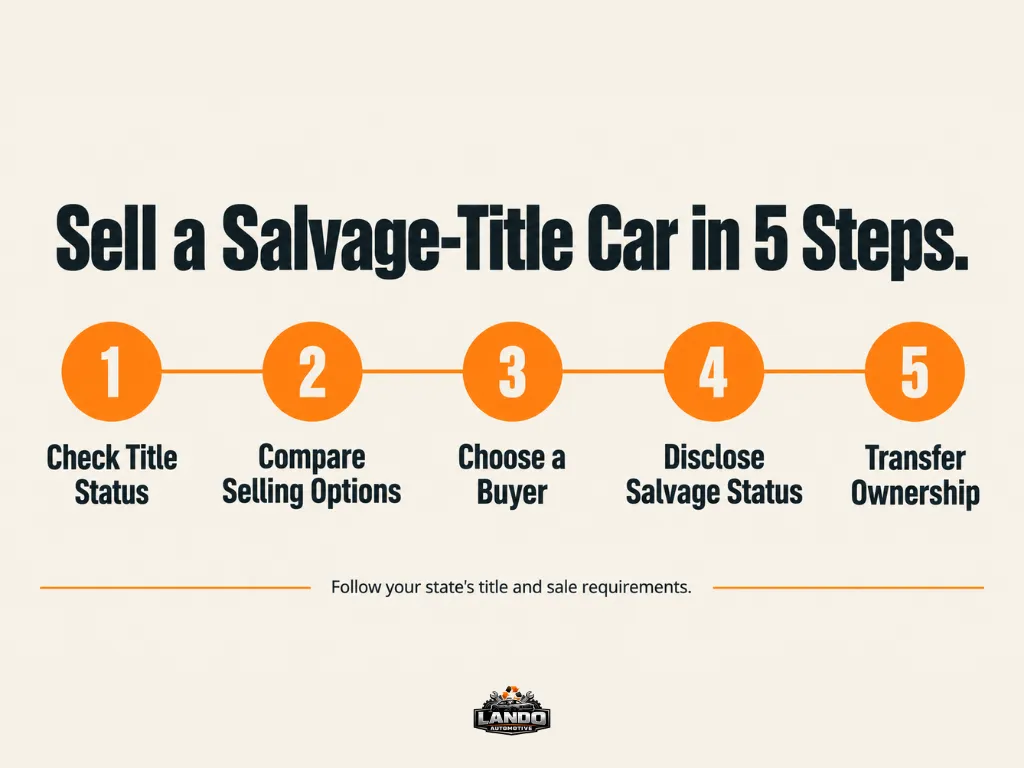
- Confirm what your title says
Your vehicle’s title status affects who can legally purchase it and whether it can be registered for road use. Check the designation on your title and verify its status with your state’s DMV. You can also review the vehicle’s history using its VIN. Common designations include salvage, rebuilt, reconstructed, and prior salvage.
If you kept the vehicle after an insurance payout, confirm whether a salvage title has been issued or is required. A repaired vehicle may still carry a salvage designation until it completes the applicable inspection and retitling process. Once approved for road use, it may receive a rebuilt title, although its salvage history can still affect resale value.
- Decide whether to sell as-is or repair first
Selling as-is avoids repair costs, but the vehicle’s condition and title status may limit your buyers. Repairing it may expand your selling options, although the rebuilt designation remains part of its history.
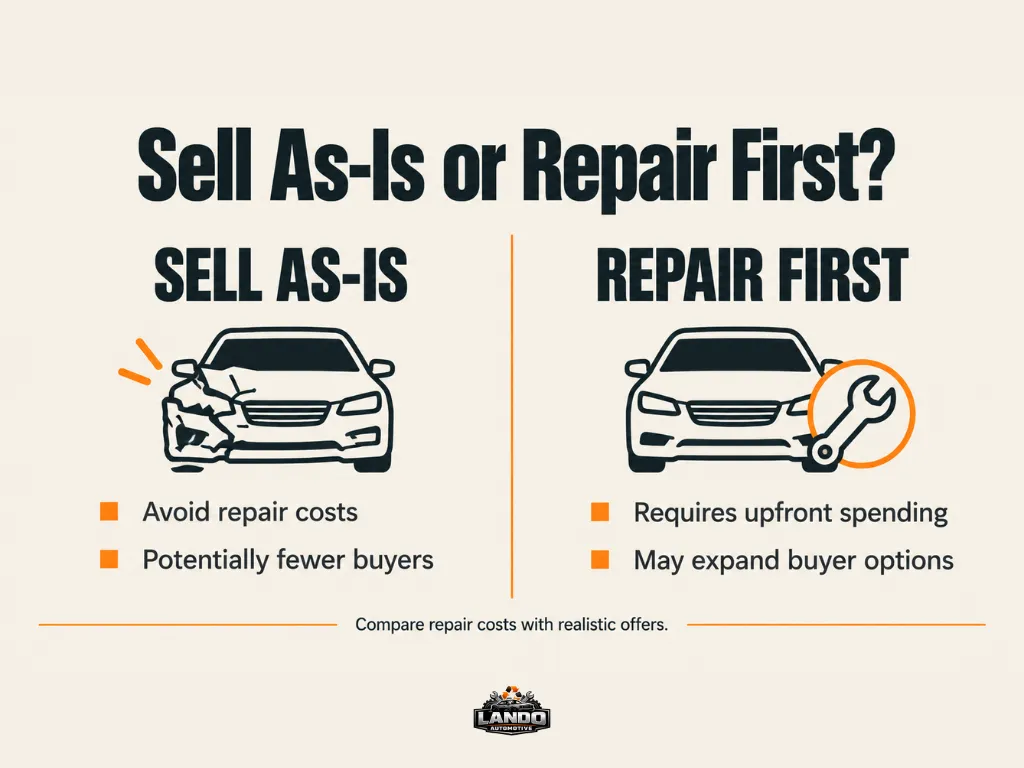
Before deciding, consider these factors:
- Repair costs – Get a written estimate from a qualified repair shop
- Time required – Account for repairs, inspections, and title processing
- State requirements – Check whether inspections and parts receipts are necessary
- Labor expenses – Consider professional repair costs if you cannot complete the work yourself
Compare written as-is offers with the vehicle’s expected value after repairs. For heavily damaged cars, a scrap car value calculator can provide a rough estimate based on weight and scrap rates. Actual offers may differ depending on reusable parts and overall condition.
- Choose a suitable buyer
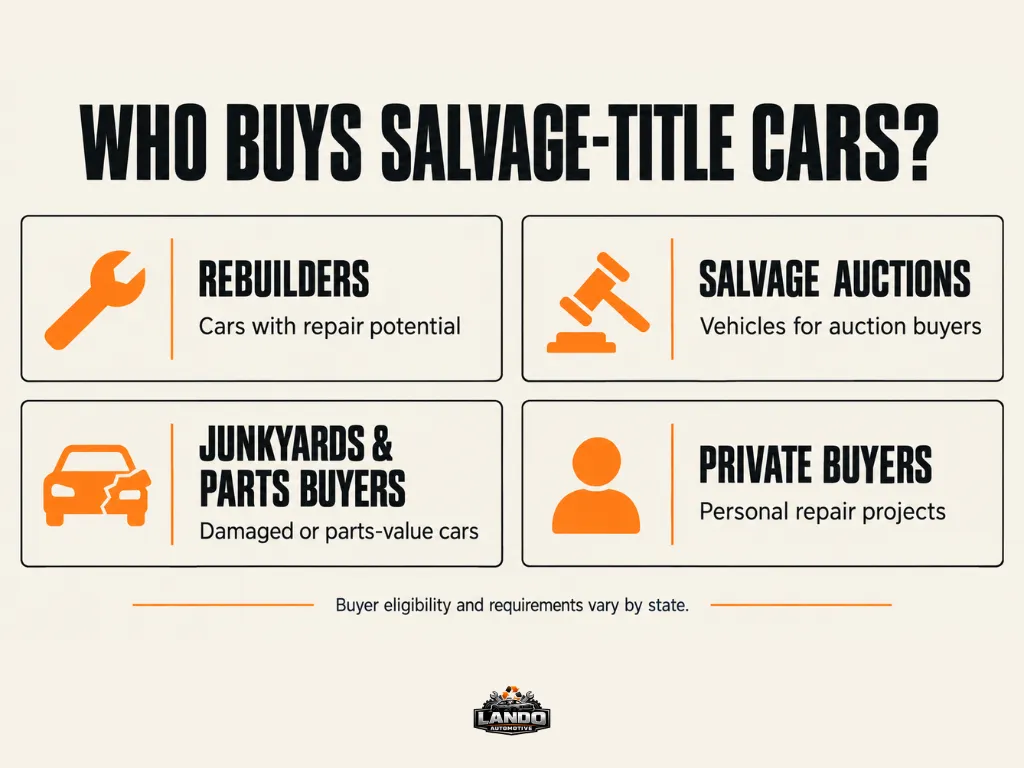
Buyer type matters more than listing quality. A clean-title dealer can’t retail your car, while a rebuilder can see the finished car inside your damaged one. Call the right people first.
| Buyer Type | Speed of Sale | Effort for the Seller | Best Fit |
| Rebuilders and Rebuilt-Title Dealers | Days to a week | Low – photos, estimate, title | Repairable cars where you want the best as-is price |
| Salvage Auctions and Direct-Purchase Programs | Days to weeks | Low to medium – broker or fees may apply | Newer cars and wide exposure |
| Cash-for-Cars, Junkyards, Parts Buyers | Same day to a few days | Very low | Heavily damaged cars worth more as parts |
| Private Buyers Who Plan to Fix It | Weeks | High – marketing, questions, negotiation | Popular models and enthusiast cars |
Specialist buyers
Rebuilders and salvage vehicle buyers evaluate cars based on their condition, repair costs, and potential resale or parts value. Before making an offer, they may request clear photos, repair estimates, insurance settlement records, and proof of ownership.
Salvage auctions provide another selling option, although fees and access requirements vary. Some sellers may need to use a licensed broker. Alternatively, scrap yards and junkyards may purchase the vehicle, but they assess its value differently. Scrap yards focus primarily on recoverable metal, while junkyards may pay for reusable parts. The most suitable option depends on the vehicle’s condition and remaining value.
Private buyers and online listings
Private buyers interested in repair projects may consider salvage-title vehicles, particularly when the damage is clearly documented. When creating a listing, disclose the salvage title upfront and describe any known damage or completed repairs.
Include clear photos of the exterior, interior, damaged areas, and odometer. Providing repair records and accurate vehicle details can help buyers assess its condition before making an offer.
Dealership trade-ins
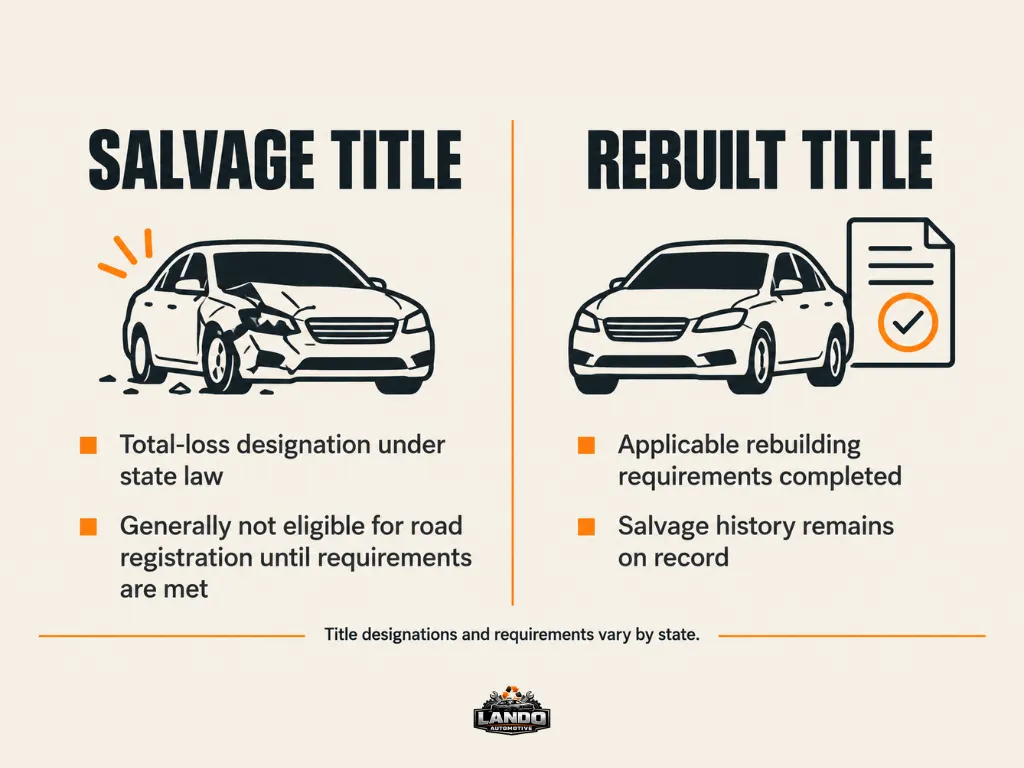
Many traditional dealerships are reluctant to accept vehicles with unrepaired salvage titles because they generally cannot be sold for road use without meeting rebuilding requirements. Some may still consider them for wholesale or auction.
A rebuilt title may expand your trade-in options, but acceptance depends on dealership policies, vehicle condition, and state regulations. Dealers specializing in rebuilt vehicles may be more familiar with these cars, although their offers still reflect the vehicle’s history and resale potential.
- Disclose the salvage title in writing
Disclose early and in three places: the listing’s first line, your first message to each buyer, and the bill of sale. Add as-is wording to the bill of sale, such as “sold as-is, salvage title, no warranty”. Share the history report and any repair records you have.
Rules vary by state, and hiding the brand invites sale reversals and fraud claims. Your state DMV publishes the exact requirements.
- Close the sale and transfer the title
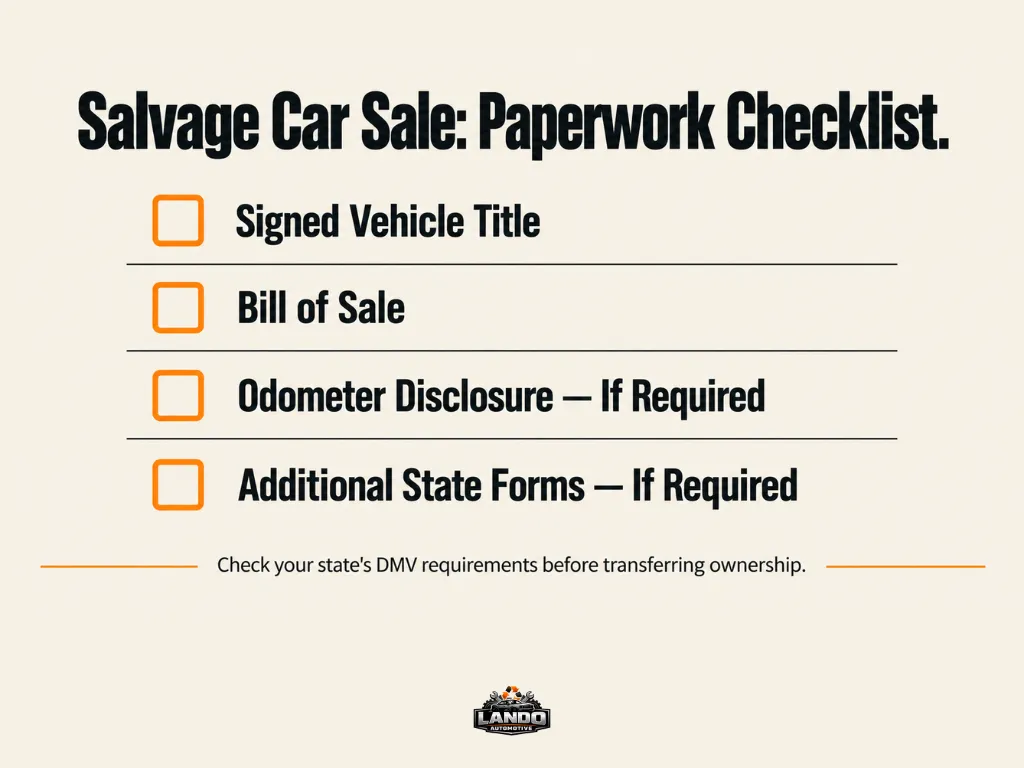
Before completing the sale, prepare the required paperwork to transfer ownership. Depending on your state’s requirements, you may need:
- Signed title – Include the buyer’s correct legal name and other required information
- Bill of sale – Record both parties, the date, sale price, VIN, mileage, and salvage title status
- Odometer disclosure – Provide one if required for your vehicle
- State-specific forms – Complete any additional documents required by your DMV
Confirm payment before handing over the vehicle and completing the transfer. After the sale, file any required notice of sale or release of liability, handle the license plates according to state rules, and cancel your car insurance once the transfer is complete. Keep copies of the paperwork for your records.
Requirements vary by state, so check your DMV’s website. If you’re selling to a junkyard, notifying the DMV when you junk a car may involve additional requirements.
Frequently Asked Questions
Can you sell a salvage title car that still has a loan on it?
Yes, but the lender holds the lien, so you must clear the lien before selling or junking the car. Request a payoff letter, then have the buyer or dealer pay the lender directly, and obtain the lien release before transferring ownership.
Can you sell a salvage title car if you don’t have the title?
In most cases, you’ll need to obtain a replacement title before selling. Contact your state’s DMV to request a duplicate and confirm the transfer requirements. Some states allow exceptions, particularly when junking a car without a title, but eligibility and required paperwork vary.
Can you sell a salvage title car to a buyer in another state?
Yes. The salvage brand carries over to the buyer’s state, and that state sets its own registration and inspection rules. Auctions and rebuilders routinely buy across state lines.
How long does it take to sell a salvage title car?
Cash buyers and parts buyers can close in days. Rebuilders and auctions typically take days to a couple of weeks. Private sales run longest, often several weeks, because the buyer pool is small.
Can you resell a salvage title car you bought at auction?
Yes, if the sale meets state title and transfer requirements. The salvage history remains on record, and disclosure rules vary by state. If you regularly resell vehicles, check local dealer licensing requirements, as some states limit sales by unlicensed sellers.
Final Takeaway
Can you sell a car with a salvage title? Yes, but your selling options depend on the vehicle’s condition, title status, and state regulations. Whether you sell as-is or repair the vehicle first, accurate disclosure and proper documentation are essential for completing the sale.
Before accepting an offer, compare your options, confirm the buyer’s requirements, and check your state’s title transfer rules. Taking these steps can help you avoid unnecessary costs, prevent paperwork issues, and complete the sale with fewer complications.