
Getting rid of a car is usually straightforward, but an outstanding lien can make the process more complicated. If you still have a loan on a vehicle that is damaged, no longer running, or simply not worth keeping, you may be unsure what options are available and what steps to take. Knowing how the lien affects the process can help you avoid delays, confusion, and unexpected problems.
That is why it is important to understand what happens when a vehicle has an active lien and what paperwork may be required. This article covers the key steps and explains how the process can vary depending on your situation. So, can you junk a car with a lien on it? Find out in the following sections.
Can You Junk a Car With a Lien on It?
Whether you can junk a car with a lien on it depends on the remaining loan balance, the lien’s status, your lender’s requirements, and your state’s title-transfer rules.
A lien does not necessarily prevent you from junking the vehicle, but the lienholder’s legal interest must be addressed before ownership can be transferred. In some cases when you want to sell a junk car, the lender may work directly with the junk-car buyer to handle the payoff and title transfer. In others, you may need to pay the loan in full and obtain a lien release before the vehicle can be accepted. The exact process varies by lender and state, so check the title and your lender’s requirements before arranging the sale.
What Does a Lien on a Car Mean?
A lien is the lender’s recorded financial interest in your vehicle. It exists to protect the lender’s investment until the debt tied to the car is fully paid.
Active loan and active lien
If you’re still making payments, the lien is active. The lender’s interest remains recorded on the title (or in your state’s electronic title system), and that record has to be cleared before ownership can legally transfer to a new party, including a scrap yard.
Paid loan but unreleased lien
Sometimes the debt is fully settled, but the lien was never removed from the record. This is more common than most owners realize, particularly with older vehicles, refinanced loans, or lenders that were slow to update the paperwork. The debt is gone, but the paper trail hasn’t caught up.
Financed car vs. leased car
These are not the same situation. With a financed car, you’re the legal owner and the lender holds a lien until you pay it off. With a leased car, the leasing company owns the vehicle outright; you’re not authorized to sell or junk it at all without their direct involvement, regardless of its condition.
Do Scrap Yards Check for Liens?
Reputable scrap yards and junk-car buyers typically check the title, run the VIN, and confirm lien-release status before finalizing a purchase. This isn’t a formality; it protects the buyer from unknowingly acquiring a financed, stolen, or disputed vehicle, and it protects you from a sale that could later be unwound.
That said, verification practices vary by buyer. Not every operation checks with the same rigor, and some less scrupulous buyers may skip the step entirely, which shifts risk back onto the seller if the lien later surfaces. Working with an established, transparent buyer is the safest way to ensure the transaction holds up.
How to Get Rid of a Junk Car With a Lien
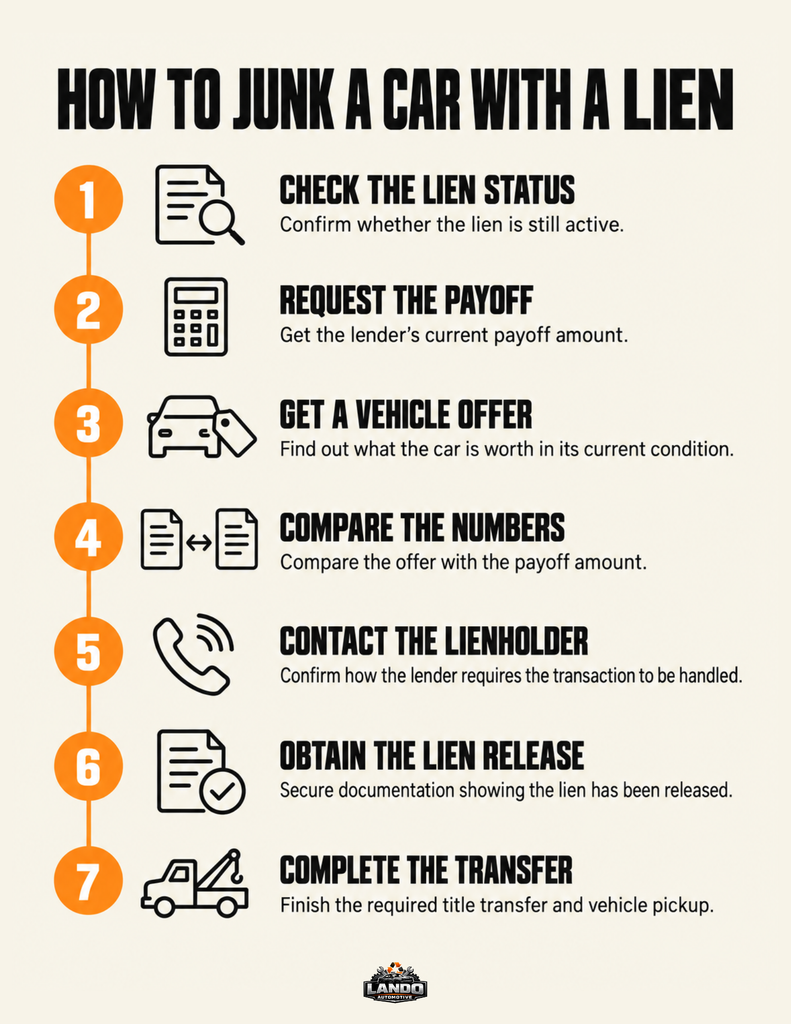
- Confirm the lien is active – Check your title or contact the lender to confirm the lien and any remaining balance.
- Request a current payoff quote – Get a written payoff amount valid through a specific date.
- Get a junk-car offer – Contact a junk-car buyer to find out what your vehicle is worth.
- Compare the offer with the payoff – Determine whether you will owe money, break even, or receive cash.
- Ask the lender how to handle the sale – Confirm whether the lender will work with the buyer or requires full payment first.
- Obtain the lien release – Once the balance is settled, get written confirmation that the lien has been released.
- Complete the title transfer and pickup – Finalize the sale after the lien release and required title documents are in order.
Common Junk-Car Lien Situations
What if the junk-car offer is less than the loan balance?
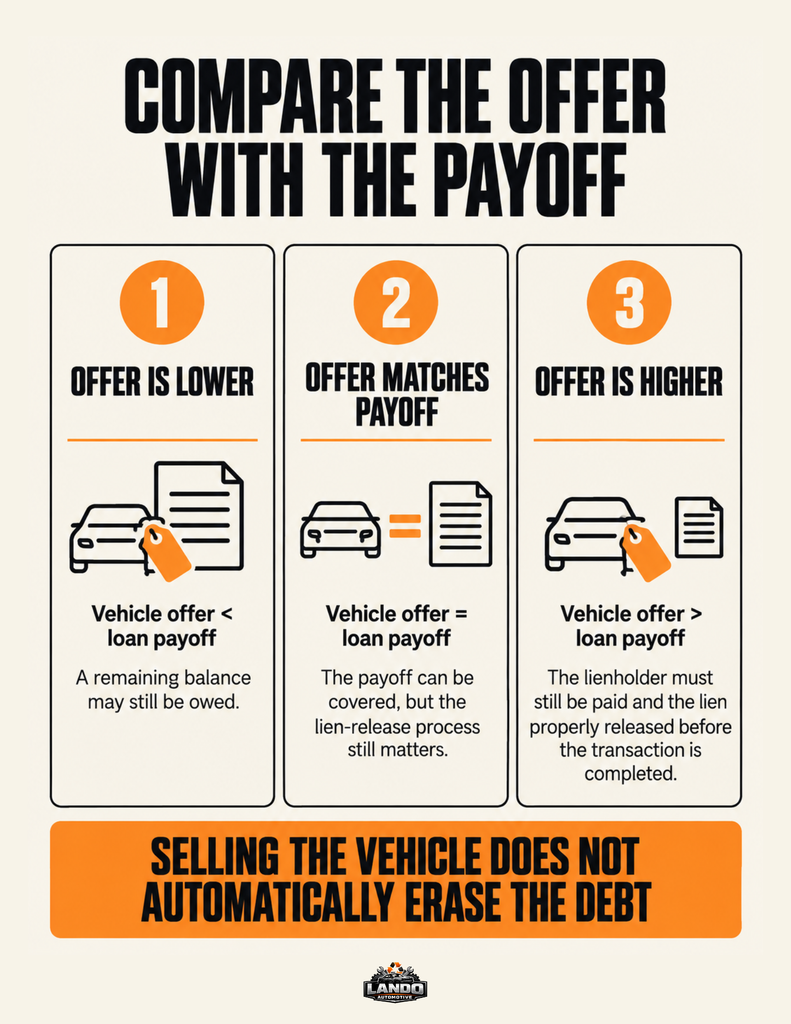
This is the most common scenario. If your payoff is $3,000 and the junk offer is $1,800, you’re still responsible for the remaining $1,200. That balance doesn’t disappear with the car; unpaid amounts can go to collections and damage your credit if ignored.
What if the junk-car offer covers the payoff?
If the offer meets or exceeds what you owe, the lienholder still needs to be paid and the release still needs to be processed correctly. Any amount above the payoff is yours, but the paperwork requirement doesn’t disappear just because the math works in your favor.
What if the loan is paid but the title still shows a lien?
An outdated lien record is one of the most common, and most avoidable, reasons a junk-car sale stalls. The debt is gone, but the title hasn’t been updated to reflect it, which can block the transfer until it’s corrected.
Removing a lien in Illinois
In Illinois, a lienholder generally must execute a vehicle-lien release within 21 days after receiving payoff; if payment is made by cash, certified check, or cashier’s check, the deadline is 10 business days. If the lienholder fails to comply, Illinois law makes it liable for $150 plus reasonable attorney fees and court costs.
After release, the title and release may be submitted to the Illinois Secretary of State for a new title showing no lien. For electronically held titles, participating lienholders can transmit the lien satisfaction through Illinois’s Electronic Lien and Title (ELT) system.
Removing a lien in Indiana
Indiana generally requires a signed title release or a formal release letter from the lienholder. Where the lender participates in Indiana’s electronic lien program, the record can be cleared digitally rather than waiting on mailed paperwork, worth asking about upfront to save time.
What if the lienholder is out of business?
If the original lender has closed, merged, or otherwise can’t be reached, most states have a process for this. You may need additional documentation from your state’s title agency, an affidavit, or in some cases a court order confirming the debt is satisfied and the lien should be cleared. Your local DMV or Secretary of State’s office can point you to the correct form.
Can you junk a totaled car with a lien?
Yes, but the insurance settlement changes the order of operations. When a financed car is totaled, the insurance payout is typically sent to the lienholder first. If you owed $3,000 and the payout is $4,000, the lender takes its $3,000 and you receive the remaining $1,000. If the payout is only $2,000, you’re still responsible for the $1,000 difference. Once the lender has been paid and the lien released, the vehicle can generally be junked without further complication, particularly if you’ve already decided whether it’s time to get rid of the vehicle.
What Happens If You Junk a Car With a Lien on It?
Attempting to junk a car with an active, unresolved lien typically leads to one of a few outcomes: a rejected title transfer, a buyer who refuses the vehicle outright, or, if the sale somehow goes through, continued liability for the remaining loan balance. Understanding what happens after the sale can also help clarify which responsibilities remain with the seller.
In several states, knowingly transferring a vehicle without disclosing an active lien can carry legal consequences, including fraud-related or other criminal charges in serious cases. The lien doesn’t disappear because the car does; the debt and the legal exposure stay with you.
What Not to Do With a Liened Junk Car
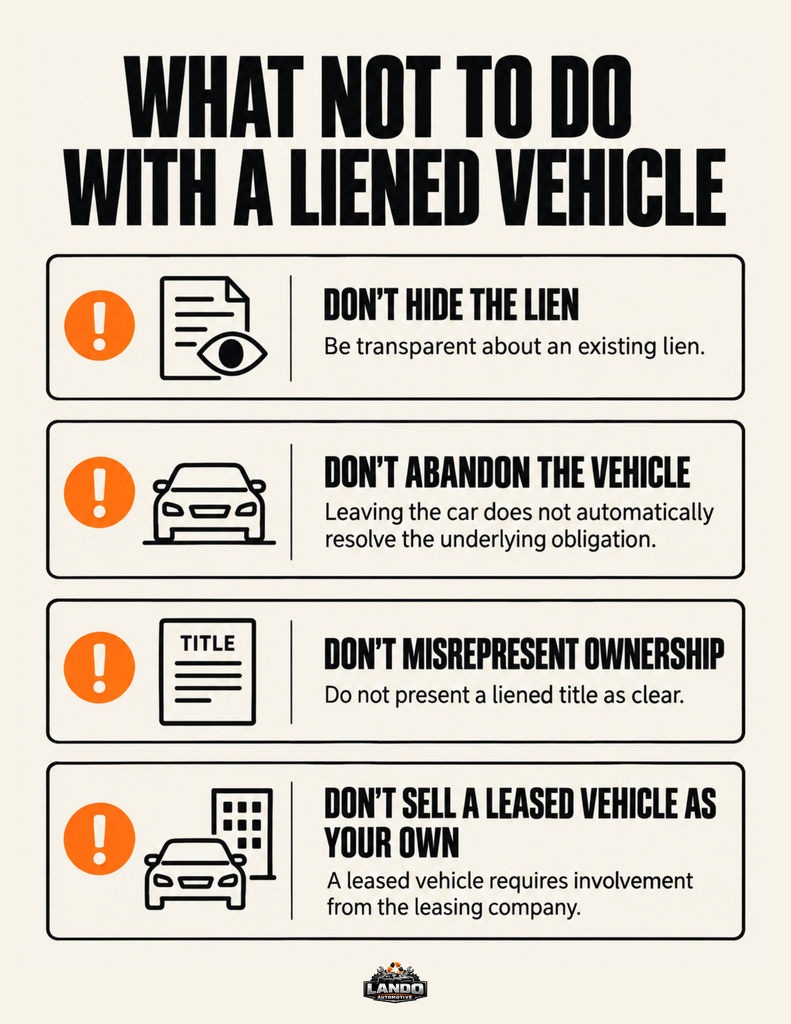
- Don’t hide the lien from the buyer – If it surfaces later, the sale can be unwound and you may face legal claims.
- Don’t abandon the vehicle – The lender can still repossess it, charge fees, and report a deficiency balance to credit bureaus.
- Don’t misrepresent ownership – Claiming a clear title when a lien exists exposes both you and the buyer to risk.
- Don’t attempt to junk a leased vehicle without the leasing company’s direct involvement – you don’t hold legal title to sell.
Selling the Car After the Lien Is Released
Once the lien is cleared and you have a corrected title in hand, the process becomes straightforward: request an offer, confirm the vehicle’s details, and schedule pickup, provided the required title documents are in order. Because the legal groundwork is already done, this stage typically moves quickly, often within a day or two with an established buyer.
Final Takeaway
A lien doesn’t mean your car can’t be junked; it means the lienholder’s claim has to be properly resolved first. Confirm the lien status, get a payoff quote, compare it against your offer, and secure a documented release before finalizing the sale. Handle those steps in order, and junking a financed vehicle can be a straightforward process with fewer surprises.
Once you know where you stand with the lien, Lando Automotive can help make the next step easier with a fast, straightforward offer for your vehicle. Our team can help you understand the sale process and move forward with confidence once the required paperwork is in order.