Junking a car involves more than simply handing over the keys and getting rid of the vehicle. Title records, license plates, ownership documents, and state reporting requirements can all affect what happens after the sale. Missing one of these steps can create confusion about who legally owns the vehicle afterward. That is why many owners end up asking do I need to notify DMV if I junk my car?
The process can look different depending on where the vehicle is registered and which agency handles motor vehicle records in that state. This article explains how Illinois and Indiana handle junk vehicle reporting, what a DMV junk car application may involve, and which steps are worth completing after the vehicle changes hands.
Do You Need to Notify DMV If You Junk Your Car
Yes, you may need to notify the DMV (Department of Motor Vehicles) or your state’s equivalent agency when you junk a car, but the rules vary by state. Some states require the seller to report the transfer or disposal, while others place that responsibility on the licensed junkyard or scrap processor. Always check your state’s title, plate, and notification rules before completing the transaction.
Do you need to notify the Illinois Secretary of State?
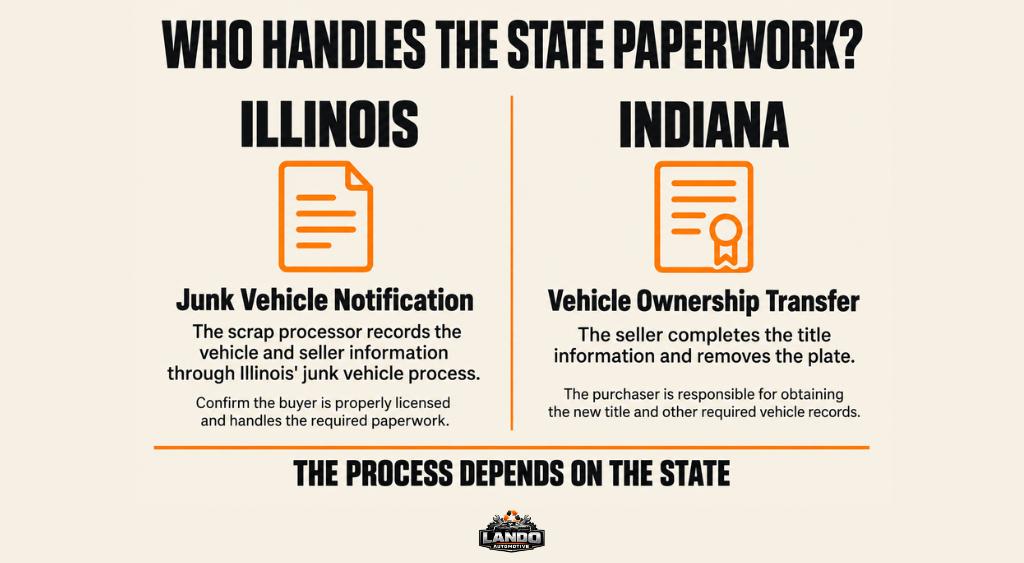
In Illinois, vehicle titles, registrations, and junk vehicle records are handled by the Illinois Secretary of State (SOS), rather than an agency called the DMV.
When a vehicle is junked, the relevant document is the Junk Vehicle Notification (Form VSD 325). The form records the vehicle’s identifying information, including its VIN, make, model, and title details, as well as the licensed scrap processor or junkyard that received it.
In most cases, the licensed scrap processor submits the notification after taking possession of the vehicle. As the seller, your main responsibility is to work with a properly licensed processor and make sure your ownership information is transferred accurately at the time of sale.
Before completing the transaction, confirm that the buyer is licensed and will submit the required notification to the Secretary of State. Keeping the paperwork trail clear can help prevent ownership or liability issues later.
Do you need to notify the Indiana BMV?
Indiana handles junk-car sales much like other private vehicle sales, although different rules can apply to salvage, abandoned, or other special-title situations. The Indiana Bureau of Motor Vehicles (BMV) generally places the main transfer responsibility on the buyer after the vehicle changes hands.
At the time of sale, the seller should remove the license plate. The junk car buyer, is then responsible for completing the title transfer and any registration steps that apply.
Indiana also does not require plates from sold vehicles to be returned to the BMV. In some cases, the plate can be transferred to another qualifying vehicle you own. Even so, the title transfer still needs to be completed correctly so your ownership record is properly closed out.
What Is a DMV Junk Car Application?
The term “DMV junk car application” can create a common misconception: there is no single, universal form or process that goes by this name. The phrase is often used loosely online, but what you actually need depends on your state and your specific situation. It typically refers to one of several distinct processes:
- Junk vehicle notification – A filing (like Illinois’s VSD 325) that formally records a vehicle as scrapped, usually submitted by the processor.
- Title transfer – The standard process of signing ownership over to a buyer, required in most private and junkyard sales.
- Salvage title – A separate title designation for vehicles deemed a total loss (often insurance-related) that must be repaired and re-inspected before returning to the road.
- Certificate of authority – Issued to licensed dismantlers and scrap processors, confirming they’re authorized to receive and process junk vehicles.
Knowing which of these actually applies to you prevents wasted time hunting for the wrong form.
What Should You Do After Junking Your Car?
Even after junking your car, understanding what happens after you junk a car can help you complete the final steps that protect you from title, plate, or ownership issues.
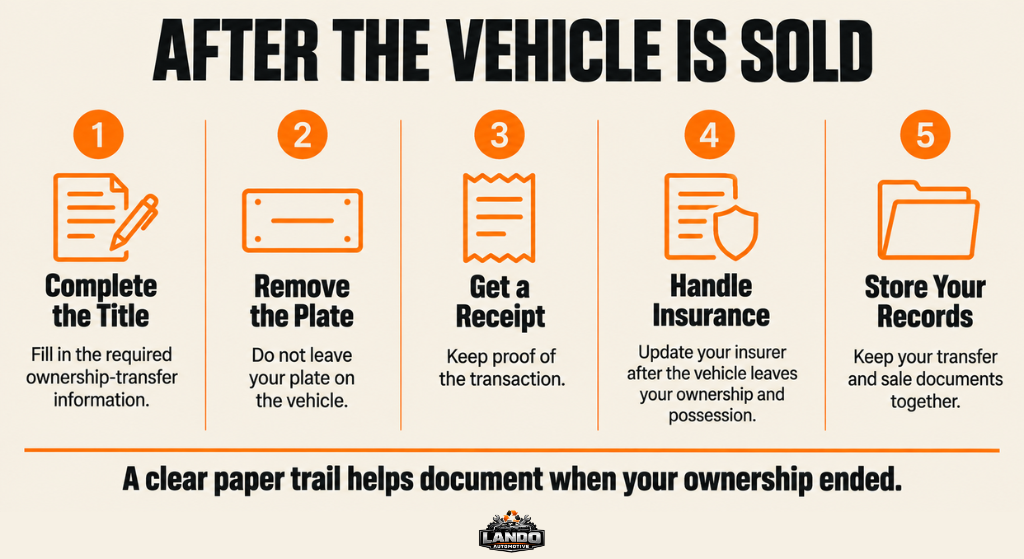
Sign over the title
Complete all required seller and buyer fields on the title; don’t leave any ownership information blank. An incomplete title is one of the most common reasons a seller later gets contacted about a car they no longer own. Hand the fully completed title directly to the junk car buyer at the time of pickup.
Remove your license plates
In most states, plates stay with you, not with the junked vehicle. Exactly what you do with them afterward, be it surrender, transfer, or hold onto them, depends on your state’s specific rule, so confirm this before the tow truck arrives.
Keep your receipt
Always get a bill of sale or receipt from the buyer. At minimum, it should include:
- The vehicle’s VIN
- Vehicle make, model, and year
- The buyer or business name
- Date of the transaction
- Sale amount (if applicable)
This document is your primary proof that you no longer own the car.
Cancel your insurance
Notify your insurer once the vehicle is officially out of your possession, but not before. If your policy must remain active for the car to be legally driven or towed to its final destination, canceling too early can create a coverage gap at exactly the wrong moment. However, before canceling your insurance, consider the timing of the junking process so the vehicle is no longer covered only after it has officially left your possession.
Keep copies of your paperwork
Hold onto everything: the title transfer documentation, your receipt, any state forms filed, and any other ownership records. Treat these the way you’d treat tax documents – filed away and easy to retrieve for at least a few years.
What Happens If You Don’t Complete the Junk Car Paperwork?
Skipping these steps doesn’t just create minor inconveniences. It creates a documentation gap that’s genuinely hard to close later. Without a signed title or notification on file, there’s no clear record of when you stopped owning the vehicle. If a parking ticket, toll violation, or worse shows up months later tied to your old VIN, an incomplete or missing title transfer makes it far harder to prove the car wasn’t yours anymore.
This is exactly why the receipt and paperwork-retention steps aren’t optional extras. They’re your evidence trail if your ownership status is ever questioned.
Do You Need a Title to Junk a Car?
Most legitimate junkyards and scrap processors require proof of ownership before accepting a vehicle, and a clean title is usually the simplest way to provide it. However, a standard title transfer is not always the only option, especially when the vehicle has been totaled, the title is missing, or the usual paperwork is unavailable.
Some states have separate salvage or junk vehicle procedures for these situations. Indiana’s BMV, for example, provides specific processes for vehicles with a lost or unavailable title, although additional verification may be required to confirm legal ownership before disposal can move forward.
If you don’t have your title, the next step is to check with your state’s title authority. They can explain which alternative process applies and what documents you will need to complete the transaction.
Conclusion
Junking your car is straightforward once you know which agency and paperwork apply to your situation. If you were wondering do I need to notify DMV if I junk my car, you should know that the requirements depend on your state and the agency responsible for vehicle records. In Illinois, that means following the Secretary of State’s junk vehicle process and using a licensed scrap processor. In Indiana, it means handling the plate and title transfer correctly.
Despite those state-level differences, the basic steps remain the same. Sign over the title completely, keep your receipt, cancel insurance at the right time, and hold onto your paperwork. Following these steps helps make the transaction final and reduces the chance of ownership or paperwork issues later.
For more guidance on junking a vehicle in Illinois or Indiana, explore Lando Automotive‘s junk car resources or request a free quote.