
Figuring out what an old car is worth can be difficult when scrap prices, vehicle condition, weight, and usable parts all affect the final amount. Values can also change depending on local demand and current metal prices. A quick estimate can give you a useful starting point before you contact a buyer or arrange pickup.
Our scrap car value calculator helps you estimate that value using key vehicle and market factors. This guide explains how the estimate is calculated, what can raise or lower your car’s value, and what to expect when turning that estimate into an actual offer.
Calculate Your Scrap Car Value
Free planning estimate
Scrap Car Value Calculator
Estimate your vehicle’s base scrap-metal value using its curb weight and a whole-vehicle scrap rate. Then see which details a buyer may consider in a firm offer.
Estimated base scrap-metal value
$0
- Vehicle weight
- Rate used
- Rate status
Your actual junk-car offer may differ
This calculator provides a non-binding planning estimate based only on the weight and rate entered. It does not determine a guaranteed purchase price. Vehicle identity, reusable parts, condition, completeness, title or lien status, location, access, towing, and current buyer demand may affect an actual offer.
Enter your vehicle’s details above for an instant estimate. Treat it as a starting benchmark. Your final offer depends on a closer look at your car’s condition and your local market.
How the Scrap Car Value Calculator Works
A car scrap value calculator doesn’t pull a number out of thin air. It combines three core inputs to build your estimate, and understanding each one helps you read your result correctly.
Vehicle weight
Curb weight is the foundation of any scrap estimate. Heavier vehicles, full-size trucks and SUVs, for example, contain more recoverable steel and aluminum than compact cars, which raises the base metal value before anything else is factored in. This is why a large pickup and a compact sedan of the same age can land on very different ends of the estimate range.
Local scrap rate
Scrap metal prices aren’t fixed. They shift with regional demand, mill and refinery activity, and global commodity trends, so the same car can be worth a different amount depending on where it’s sold and when. A reliable vehicle scrap value calculator adjusts for current, location-aware rates rather than relying on a single national average, which is often where generic online tools fall short.
Vehicle condition and completeness
A complete vehicle is worth more than a stripped one. Missing an engine, catalytic converter, wheels, or battery removes recoverable value directly, so the calculator accounts for what’s actually present, not just the vehicle’s weight on paper. Two identical models can produce very different estimates once completeness is factored in.
Scrap Car Value vs Junk Car Value
These terms get used interchangeably, but they describe two different things, and confusing them is the most common reason people feel shortchanged by an offer.
| Scrap Value | Junk Car Value | |
| Basis | Recoverable metal weight | Metal + reusable parts |
| Best for | Non-running, stripped vehicles | Vehicles with salvageable components |
| Typical range | Lower, sets the floor | Higher, closer to the ceiling |
Scrap value is based mainly on the recoverable materials in a vehicle. Junk car value can be higher because buyers may also consider auto parts they can resell, such as the engine, transmission, electronics, and other intact components.
Salvage value may be higher still when major parts remain repairable or reusable. This means scrap value is often only the baseline. Vehicles with working or recoverable components can be worth more than their metal value alone.
What Affects a Junk Car’s Value?
Year, make, and model
Newer vehicles typically carry more resalable parts value; older ones are priced closer to pure scrap weight. Popular makes with strong parts demand, like Toyota, Honda, Ford, and similar high-volume brands, often outperform less common models of similar weight and age simply because replacement parts for them are easier to resell.
Running condition
A vehicle that runs and drives opens the door to resale and parts recovery, which usually pushes value well above basic scrap weight. Non-running cars are still valuable, just closer to the metal-only end of the range, since a buyer can no longer count on selling the drivetrain as a working unit.
Missing or damaged components
The engine, transmission, catalytic converter, battery, and wheels are among the most valuable individual parts on a junk vehicle. Each one that’s missing or damaged is deducted from what a buyer can recover, so an accurate parts inventory matters more than most sellers expect.
Title and lien status
Clean documentation makes ownership transfer straightforward. A missing title or an open lien can complicate or delay the sale, so it’s worth resolving before you request an offer rather than discovering the issue at pickup.
Vehicle location and towing access
Distance from a buyer, whether the car rolls and steers, and whether it needs specialized recovery equipment all factor into what a buyer can offer, since pickup logistics carry their own cost that gets weighed against the vehicle’s value.
Why the Final Offer May Differ From the Calculator
Your calculator estimate is a starting point rather than a guaranteed price. The final offer can change if market rates move, vehicle details were entered incorrectly, parts are missing, or the actual condition differs from what was reported.
Other factors can also affect the price, including pickup accessibility, local demand for specific parts, and title or ownership issues. These differences do not make the calculator inaccurate. They reflect details that usually cannot be confirmed until the vehicle is inspected.
The calculator gives you an informed estimate, while the verified offer reflects the car’s actual condition and current market factors.
How to Get a More Accurate Junk Car Estimate
Have these ready before requesting a verified offer:
- VIN or exact trim level
- Current mileage
- A few clear photos
- Description of any damage
- Title information
- Notes on missing components
- Pickup location
The more complete your details, the closer your final offer will land to your initial estimate. Vague or incomplete entries are the single biggest reason quotes shift later in the process.
What to Do After Calculating Your Car’s Value
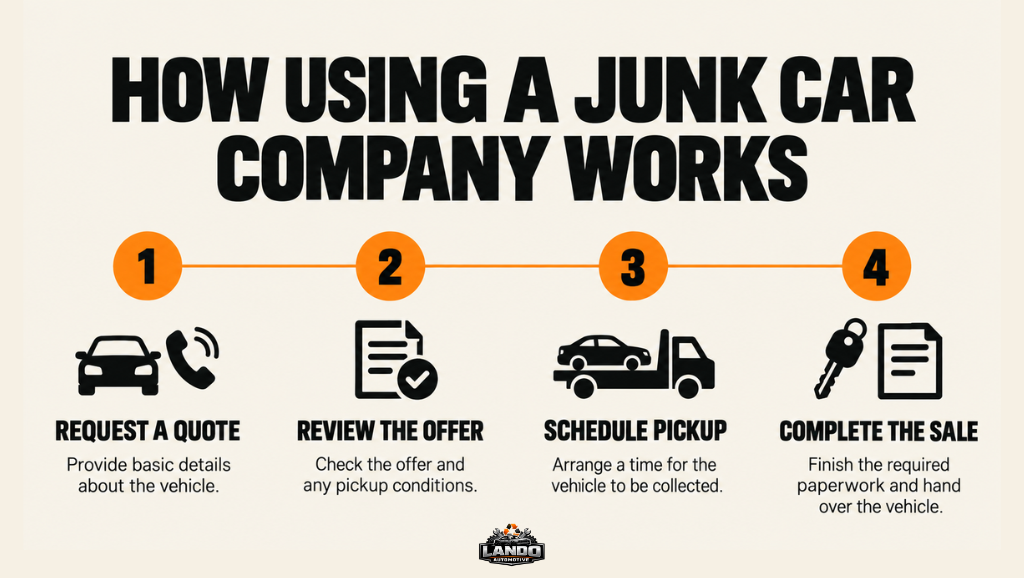
Once you have an estimate from the scrap car value calculator, the next step is to request a verified offer. Before moving forward, it helps to understand what happens during the junking process, including how the vehicle is evaluated, what paperwork may be needed, and how pickup is arranged.
Our team can then confirm your vehicle details, review the required documentation, and provide a firm price based on its actual condition and current market factors. Working with a professional junk car service can also simplify the sale by keeping the offer, paperwork, towing, and pickup within one process.
From there, pickup can be scheduled and the sale completed without dealing with multiple buyers or trying to sell usable parts on your own. This creates a clear path from an initial estimate to a confirmed offer and vehicle removal.
Frequently Asked Questions
How accurate is a scrap car value calculator?
It’s a reliable starting estimate based on weight, condition, and local rates, but a verified offer after inspection will always be more precise, since it accounts for details a form can’t capture.
How is the scrap value of a car calculated?
By combining the vehicle’s curb weight, current local scrap metal rates, and its condition and completeness.
Is scrap value the same as junk-car value?
No. Scrap value reflects metal weight alone; junk-car value adds in resalable parts and components, so it’s typically higher.
Does a running car have a higher scrap value?
Yes, running condition adds resale and parts potential on top of base scrap weight.
Does a missing catalytic converter reduce the value?
Yes. Catalytic converters contain valuable precious metals, so a missing one is one of the larger single deductions from your estimate.