
A blown motor can leave a car unable to run and facing repair costs that exceed its value. However, engine failure doesn’t necessarily make the vehicle worthless. Its condition, remaining usable parts, and scrap value can still attract buyers, even when replacing the engine isn’t financially practical.
Can you sell a car with a blown motor, and what determines how much you’ll receive? This guide covers your selling options, how salvage yards, mechanics, and dealers evaluate these vehicles, and what affects their offers. It also explains the required paperwork and common mistakes to avoid when completing the sale.
Can You Sell a Car With a Blown Motor?
Receiving cash for your car with a blown motor happens more often than most owners expect. The sale is legal as long as you describe the problem honestly, and plenty of buyers will take a car that no longer runs.
A dead motor doesn’t erase a car’s value. Salvage yards want the body, transmission, and catalytic converter. Mechanics and hobbyists see a project they can fix for less than a shop would charge. Parts resellers can break the car down and sell what still works. Some dealers will also take it as a trade-in. Your job is to find the buyer whose needs match your car.
Blown motor vs. bad engine
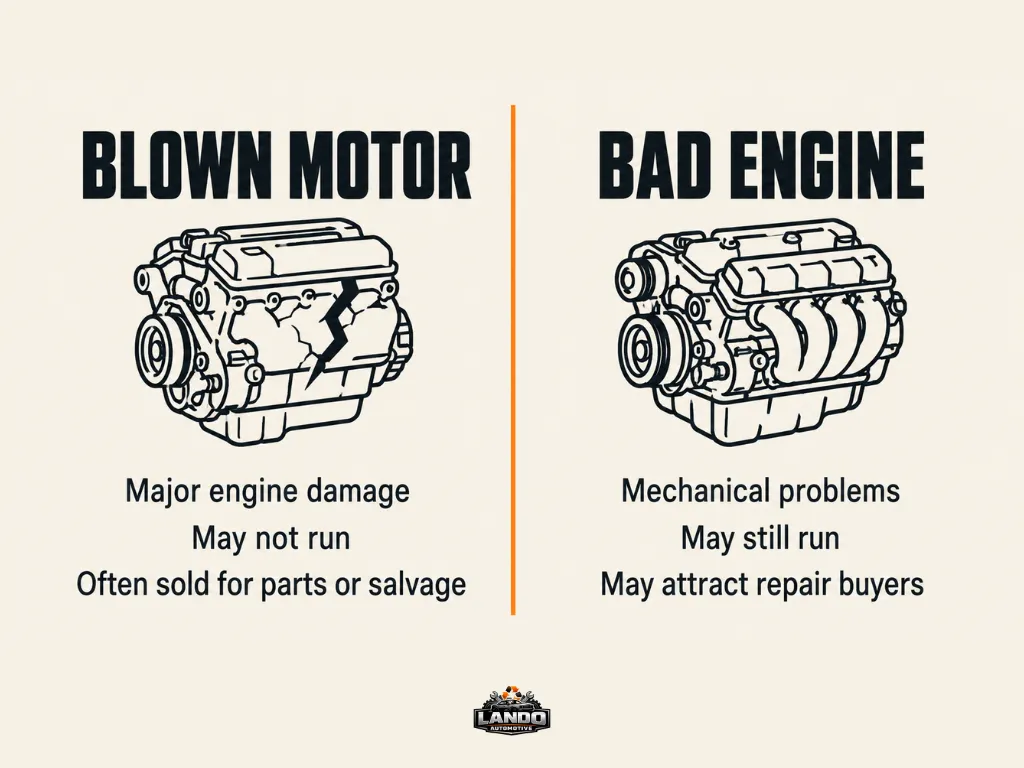
A blown motor has suffered major damage and may have seized, thrown a rod, or cracked the engine block. A bad engine, on the other hand, may still run despite problems such as burning oil, knocking, misfiring, or losing power. While both conditions drastically lower a car’s resale value, a vehicle that still runs will always attract more buyers.
This difference directly affects your selling options. So, can you sell a car with a bad engine? Yes, but the offers will depend entirely on its condition and repair costs. A car with a blown motor is typically purchased strictly for scrap parts or a total engine replacement, while a car with a bad but running engine attracts buyers who are willing to repair it.
Blown head gasket
A blown head gasket doesn’t always mean the engine needs replacing. Some vehicles remain drivable despite symptoms such as white exhaust smoke, coolant loss, or overheating. However, severe overheating can damage the cylinder head or engine block, making repairs significantly more expensive.
If you’re considering how can you sell a car with a blown head gasket, start by documenting its condition and disclosing any known problems. A vehicle that still runs may be worth repairing, while one with extensive engine damage may be better suited for salvage or parts. Be clear about the symptoms and any confirmed diagnosis when requesting offers.
Can you sell a car with a broken transmission?
Yes, through the same buyer routes covered below. A dead transmission leaves the motor intact, and a working motor is a part buyers want. Your offer depends on the rest of the car: body condition, interior, and any recent repairs. Salvage yards and junk buyers handle these cars routinely.
Confirm What Is Wrong Before You Sell
You don’t need a full repair estimate, but a quick check lets you describe the car accurately. Signs of serious engine failure include:
- Knocking or grinding sounds
- A motor that won’t turn over
- Milky oil, or coolant mixing with oil
- White smoke or repeated overheating
Start by ruling out simpler problems, such as a dead battery or failed starter, which can cause similar symptoms but cost much less to repair. If the engine has failed, ask a mechanic for a brief written diagnosis to help buyers assess its condition. The goal is to document the problem without spending money on unnecessary repairs.
Who Buys a Car With a Blown Motor
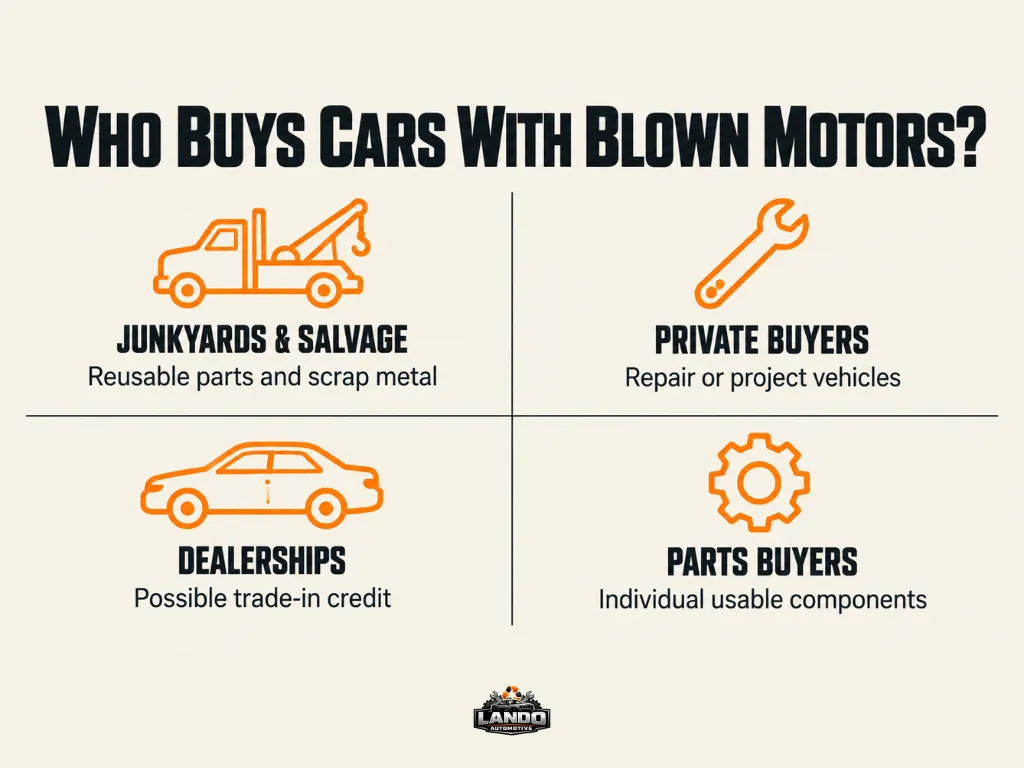
Five routes cover most sales: a car junking company, junkyards and salvage yards, private buyers and mechanics, dealership trade-ins, and parting the car out yourself. Each trades speed against payout.
Junkyards and salvage yards
Junkyards and salvage yards evaluate cars with blown motors based on their usable parts and scrap metal value. Components like the transmission, catalytic converter, and body panels often retain value even after engine failure. However, they assess vehicles differently: scrap yards focus purely on the weight of recoverable metal, whereas junkyards value reusable parts.
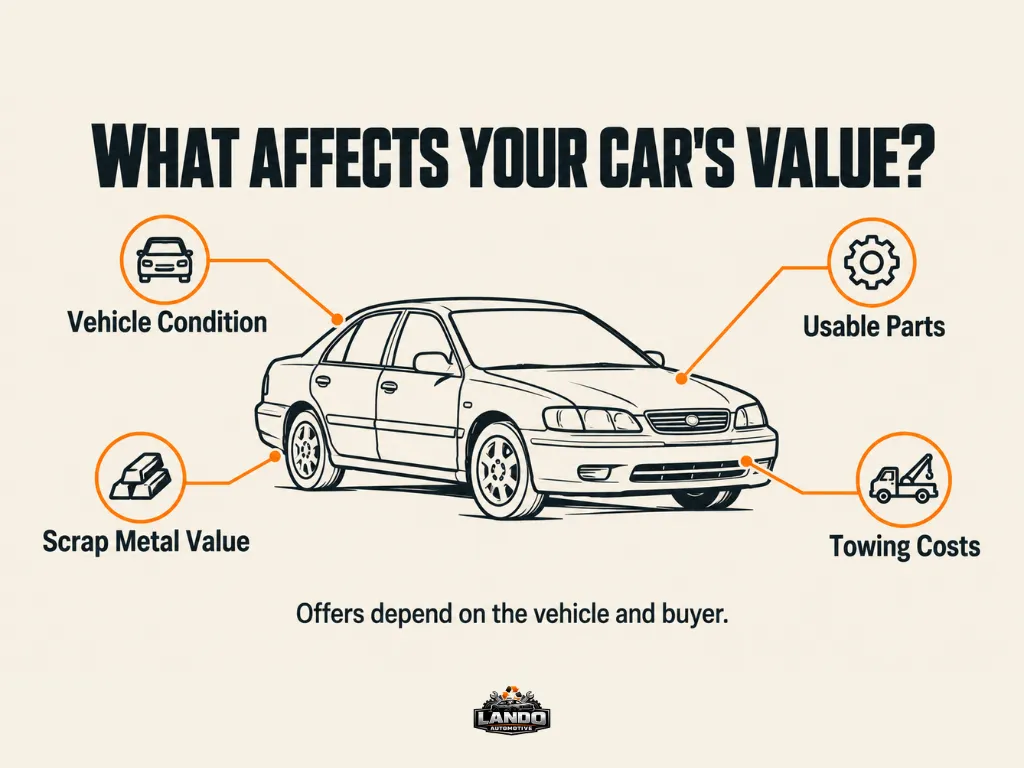
Many salvage yards and online buyers offer free towing and payment at pickup. At Lando Automotive, we calculate your offer by assessing your vehicle’s condition, salvageable parts, and local scrap rates. You can also use our scrap car value calculator to get an estimate based on vehicle weight and current market prices. Keep in mind that final offers can change depending on your car’s exact make and model, your location’s towing distance, and fluctuating metal prices.
Private buyers and mechanics
Mechanics, DIYers and hobbyists want these cars because they can swap an engine for less than a shop would charge. The trade-off is a potentially higher payout in exchange for a slower sale and more work, such as writing listings, fielding lowball offers, and meeting strangers. Photograph the problem honestly and price the car below its running value. Buyers will subtract the cost of an engine and a margin for unknown issues.
Dealership trade-ins
Dealers prefer cars they can resell quickly, and a non-running car doesn’t fit. Some will still accept one as a trade-in, usually as credit toward another car instead of cash, and often at a low value. Ask about towing before you agree, and check that the dealer isn’t deducting the tow from your trade value.
Buyer comparison at a glance
| Buyer Type | Speed | Payout | Effort for You | Towing | Paperwork |
| Junkyard/Salvage/Online Buyer | Fast (often days) | Moderate | Low | Usually free | Minimal |
| Private Buyer or Mechanic | Slow | Potentially highest | High | You arrange | You handle it |
| Dealership Trade-In | Fast | Often lowest | Low | Varies, ask first | Dealer handles it |
| Parting It Out Yourself | Slowest | High for good parts | Very high | None, but leftover shell needs removal | Multiple sales |
Prepare the Car and the Paperwork
Before selling, gather your vehicle title, photo ID, and any other documents required by your state. You may also need a bill of sale listing the buyer and seller, VIN, sale price, date, and any agreed-upon as-is terms. Check your state’s motor vehicle agency for specific requirements.
Once the paperwork is ready, remove personal belongings and check what to remove from your car before scrapping it. Take clear photos, disclose known engine problems, and confirm whether your license plates must be removed or transferred. These steps can help prevent disputes and make the handover easier.
What Happens on Pickup Day
A non-running car is typically collected by flatbed or tow truck. The buyer’s availability, towing arrangements, and paperwork can affect how long it takes to junk a car, so confirm the pickup schedule in advance.
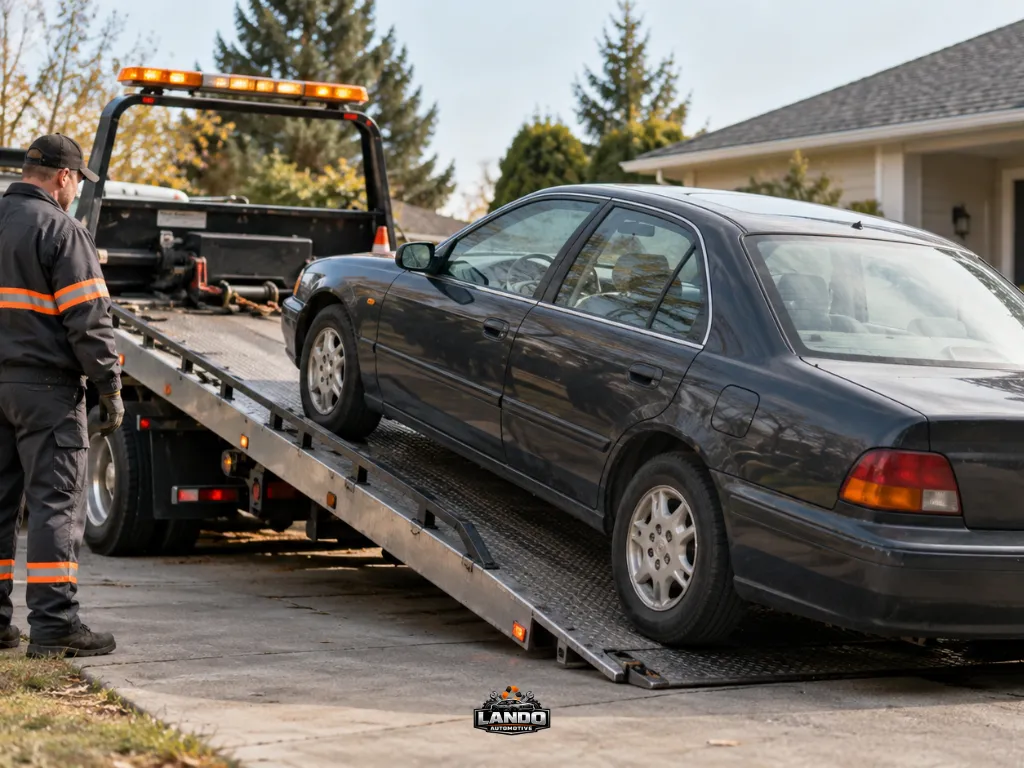
Before the driver arrives, confirm the final offer and any towing fees in writing. Check how and when you’ll receive payment, whether by cash, check, or another agreed method. You should also know which documents you’ll need to sign, such as the vehicle title and any required bill of sale.
Beyond these preparations, avoid common mistakes that could reduce your payout or complicate the sale:
- Hiding engine problems – Can lead to disputes and potential liability
- Overpricing the car – Ignoring repair costs can make your asking price unrealistic
- Overlooking towing fees – Confirm whether towing costs are included in the final offer
- Trying to restart a damaged engine – Attempting to start a seized or oil-starved engine can cause further damage
After the sale, notify your DMV that you’ve transferred the vehicle, if your state offers that step. It protects you from tickets or liability tied to a car you no longer own.
Frequently Asked Questions
Can you sell a car with a blown motor if you still owe money on it?
Yes, but you’ll need to resolve the lender’s lien before transferring ownership. Request a loan payoff amount and confirm the lender’s requirements. If the sale covers the balance, the proceeds can pay off the loan. Otherwise, you’ll need to cover the difference.
The same applies when you junk a car with an outstanding lien. Some buyers may help arrange the payoff and lien release, so confirm the process with your lender and buyer before accepting an offer.
Is it worth replacing a blown motor before selling the car?
Usually not. Engine replacement can cost several thousand dollars, and the expense may exceed the increase in resale value. However, it may be worthwhile for a newer, low-mileage, or high-value vehicle.
To determine whether it’s time to get rid of your car, compare a written repair estimate with the difference between its expected value after repairs and its current as-is offers. If the repair costs more than the added value, selling as-is may make more sense.
Will insurance or a warranty cover a blown motor?
Standard auto insurance generally covers collisions and similar events, not mechanical failure. A powertrain warranty or extended service contract may cover engine failure, so check the terms, mileage limits, and maintenance requirements before assuming the cost is yours.
Can you donate a car with a blown motor?
Yes, many charities accept non-running cars and arrange towing. If the charity sells the vehicle, your deduction generally depends on its sale proceeds, subject to IRS rules and exceptions. A tax deduction reduces taxable income rather than providing cash, so compare the potential benefit with a direct sale. Review IRS Publication 526 for eligibility, valuation, and documentation requirements.
Does the make or type of vehicle change whether you can sell a car with a blown motor?
You can sell any type of vehicle, but the make and type affect who buys it and for how much. Popular models, trucks, and SUVs with in-demand parts attract more bids. Luxury and rare vehicles may suit specialty buyers, and older economy cars often go to salvage yards.
Final Takeaway
Can you sell a car with a blown motor? Yes, even with serious engine damage, your vehicle may still have value through its usable parts and scrap metal. Whether you’re dealing with a seized engine or a blown head gasket, its condition and repair costs will influence your selling options and potential payout.
Before selling, get an accurate assessment, disclose known problems, and prepare the necessary paperwork. Confirm the final offer, towing arrangements, and payment terms to avoid surprises during pickup. With these steps, you can sell your damaged car with fewer complications and get a fair offer based on its condition.