
Flood damage can leave a car with problems that aren’t immediately visible. Even after cleaning and repairs, moisture may affect electrical systems, mechanical components, and interior materials. For owners looking to sell, these concerns can complicate the process, especially when buyers want to know the vehicle’s history.
So, is it illegal to sell a flood damaged car? The answer depends on how the sale is handled and which state laws apply. This guide explains what sellers must disclose, what actions can lead to legal trouble, and what happens when buyers discover undisclosed damage. It also covers how to document the car’s condition and whether to repair, sell, or scrap it.
Is It Illegal to Sell a Flood Damaged Car?
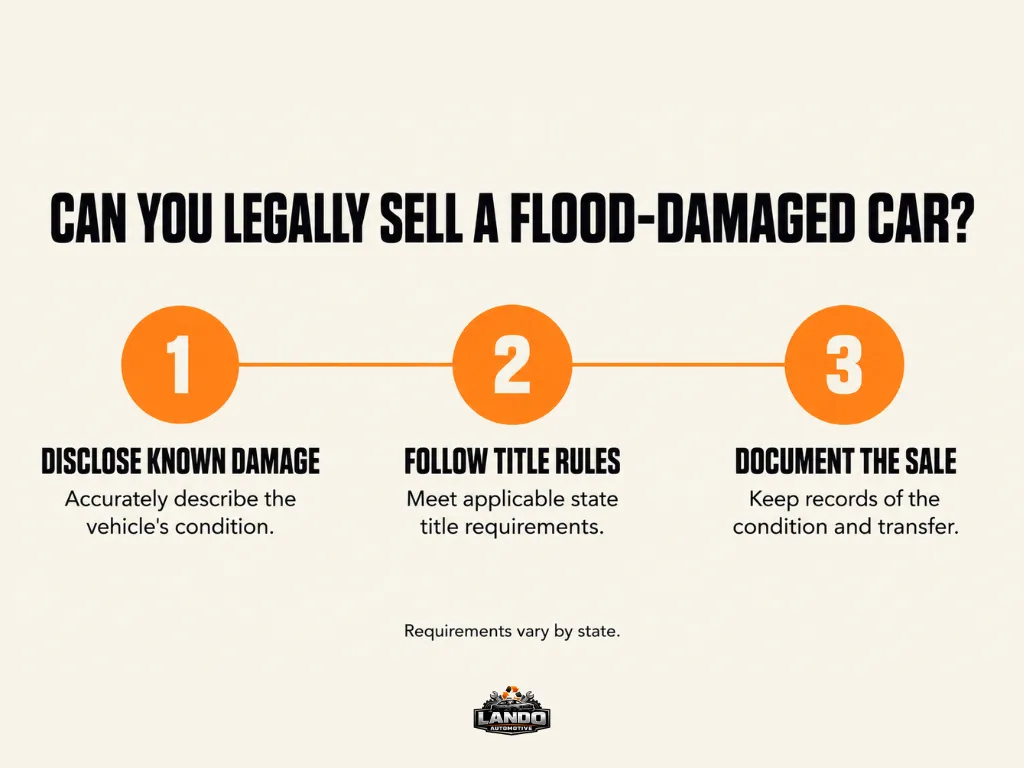
Selling a flood damaged car is generally legal in the United States. However, concealing known damage, misrepresenting the vehicle’s condition, or failing to follow applicable title requirements can make the sale unlawful. The Federal Trade Commission (FTC) warns that flooded vehicles are sometimes cleaned up and resold without buyers knowing their history.
Disclosure and title requirements vary by state. Under Illinois law, vehicles meeting the state’s flood-damage definition must carry a flood designation on their titles, even when the damage doesn’t qualify them as salvage. Indiana also has specific rules for flood-damaged vehicles, including conditions that determine whether a vehicle meets its legal definition of flood damage.
Flood damage can affect electrical systems, mechanical components, and interior materials, even when a vehicle still runs. Understanding how can you sell a flood damaged car starts with documenting its condition, disclosing known damage, and meeting the title requirements in your state.
Actions That Turn a Legal Sale Into an Illegal One
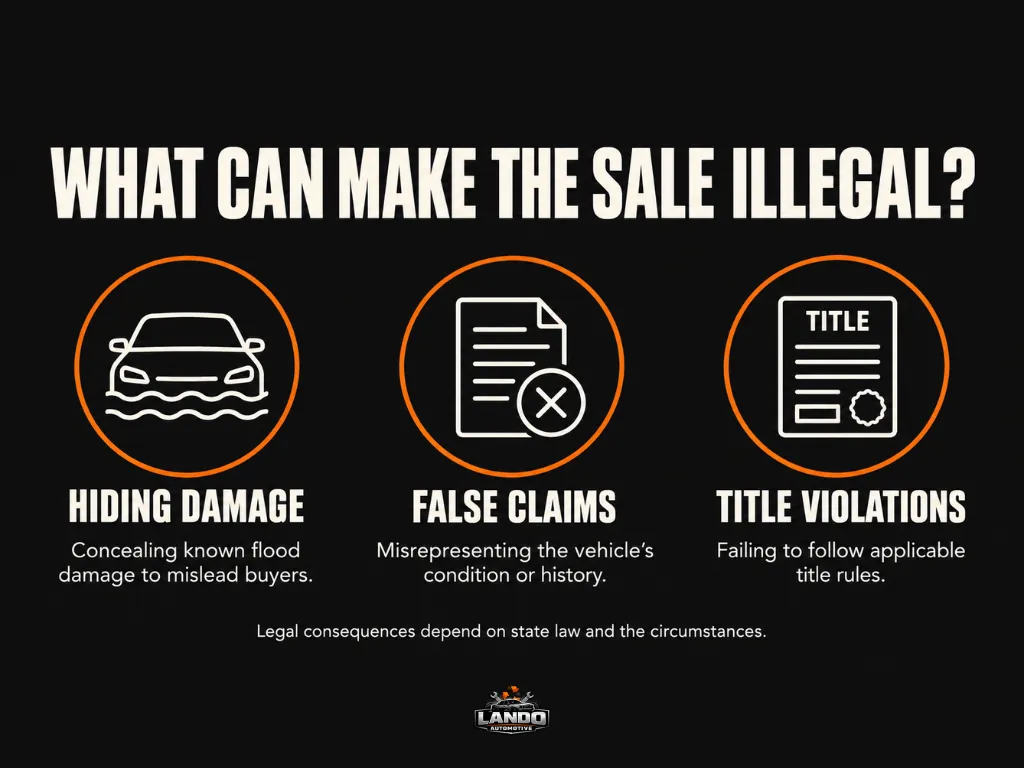
As mentioned above, selling a flood damaged car can become illegal when the seller deliberately hides known damage or misrepresents the vehicle’s history. This includes falsely claiming the car has never been flooded, concealing water damage to mislead buyers, or failing to follow applicable title-branding requirements.
Cleaning or detailing a flooded car is legal, but doing so to deceive buyers about its condition can amount to fraud. Another concern is title washing, which involves removing a damage designation when a vehicle is retitled, often in another state. The U.S. Department of Justice explains how title-brand records help protect buyers from this practice.
Selling when no insurance claim was filed
Flood damage may not appear in a vehicle history report if no insurance claim was filed. The National Insurance Crime Bureau’s (NICB) free VINCheck database only includes records supplied by participating insurers, so a clean result doesn’t guarantee the car has never been flooded.
However, the absence of an insurance record doesn’t excuse sellers from accurately representing the vehicle’s condition. Knowingly concealing flood damage can lead to legal consequences, even without an insurance claim. Sellers must also follow applicable state disclosure and title requirements.
What happens when a buyer finds out
If a buyer discovers undisclosed flood damage, they may demand a refund or try to reverse the sale. If the dispute remains unresolved, they could pursue a civil claim for misrepresentation or fraud. Depending on the circumstances and state law, consequences may include financial compensation or other legal remedies. Deliberate title fraud can also lead to criminal charges.
Buyers who suspect fraud can report it to the National Insurance Crime Bureau, the Federal Trade Commission, or their state attorney general.
A signed bill of sale doesn’t automatically protect a seller from liability for fraudulent statements or concealed damage.
Deciding Between Repair, Sale, and Scrap
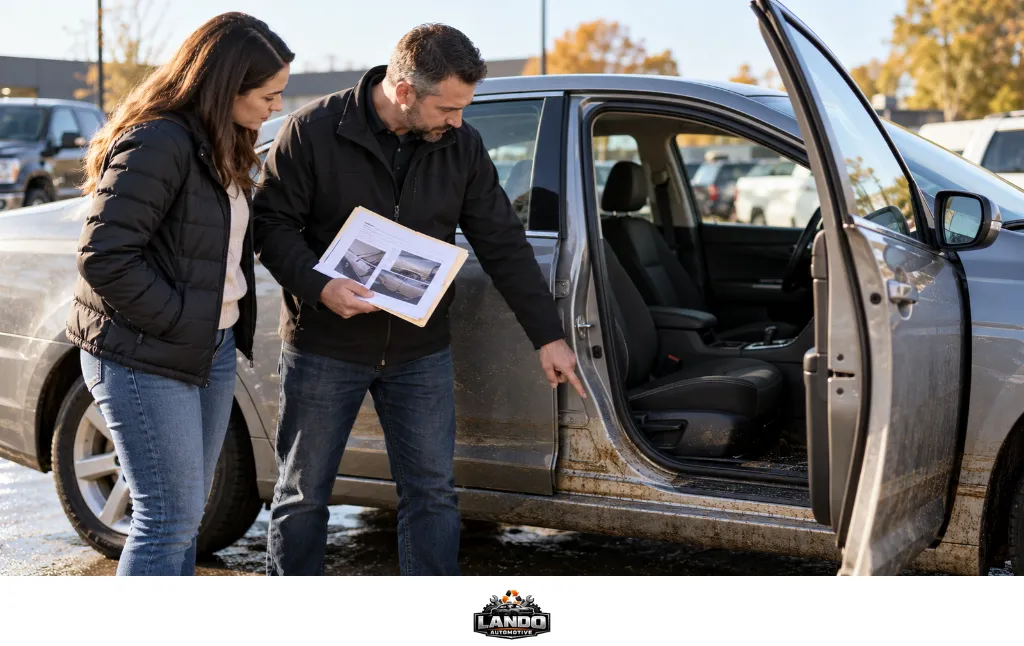
Deciding what to do with a flood damaged car depends on the extent of the damage, repair costs, and the vehicle’s remaining value. Your main options are to repair it, sell it in its current condition, or scrap it.
Before you decide, don’t start the engine, as water inside could cause serious damage. Disconnect the battery only if it’s safe, and photograph the visible water damage, odometer, and VIN. Contact your insurer before arranging repairs or selling the vehicle.
Next, have a qualified mechanic assess the damage. Water reaching the dashboard or electrical components can make repairs particularly expensive, although even shallow flooding may cause hidden problems. Compare the repair estimate with the car’s pre-flood value. If repairs aren’t financially worthwhile, consider selling it to a salvage buyer or scrapping it if it has little remaining value.
Putting the Disclosure in Writing
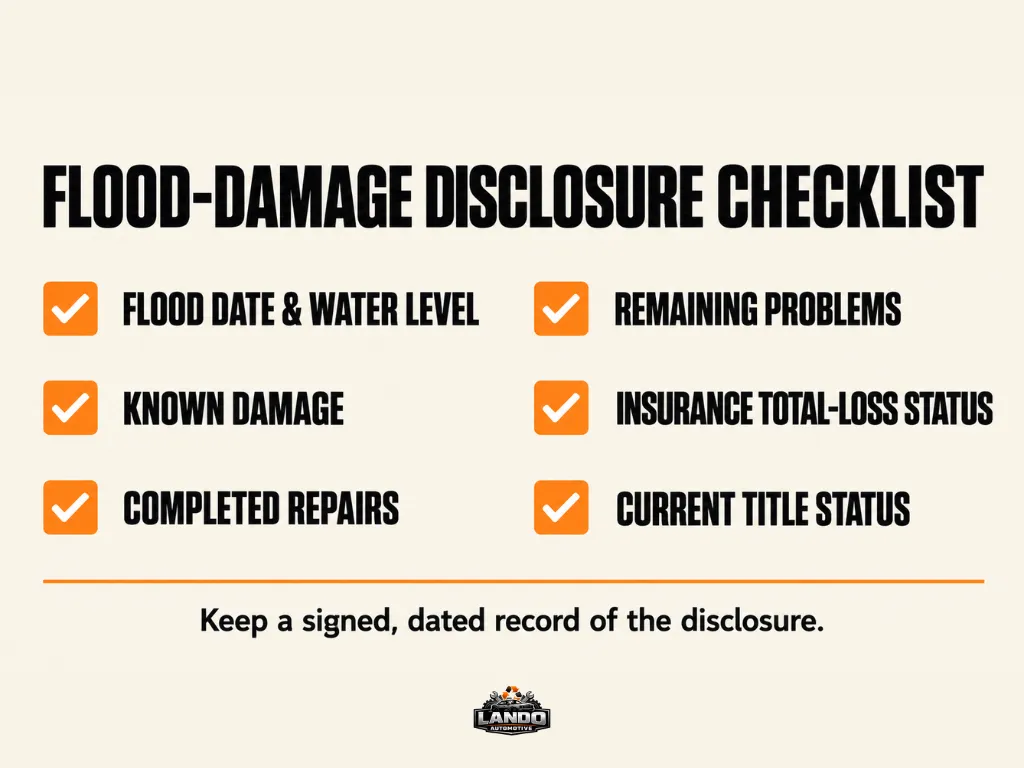
A written disclosure gives both parties a clear record of the car’s condition. Include the approximate flood date and water level, known damage, completed repairs, remaining problems, any insurance total-loss determination, and the current title status.
To check the vehicle’s title history, an NMVTIS vehicle history report can show reported title brands, although it may not reveal every instance of flood damage.
Once you’ve documented the condition, include the known damage in the bill of sale and have both parties sign, date, and keep a copy. An as-is agreement may limit warranty obligations, but it doesn’t automatically protect sellers from fraud claims involving concealed or misrepresented damage.
Choosing Who to Sell To
Your choice comes down to paperwork, speed, and what happens to the car next.
| Buyer Type | What You Disclose and Sign | Paperwork You Handle | Speed of Sale | What Happens to the Car Next |
| Private Buyer | Full written disclosure and as-is bill of sale | Title transfer, bill of sale, release of liability | Slowest; expect questions and haggling | Repaired and driven, or used as a project |
| Dealer | Disclosure per state dealer rules; often a trade-in appraisal | Dealer handles most forms | Fast, but offers are low | Often wholesaled or sent to auction |
| Junkyard or Salvage Buyer | Condition and title status | Title handover and proof of ownership | Fastest, often within days | Parted out, rebuilt, or recycled |
The biggest difference is who carries the risk afterward. A private sale keeps you responsible to an individual buyer, while a salvage buyer prices in the damage and takes the car as-is.
What the sale looks like with a junkyard buyer
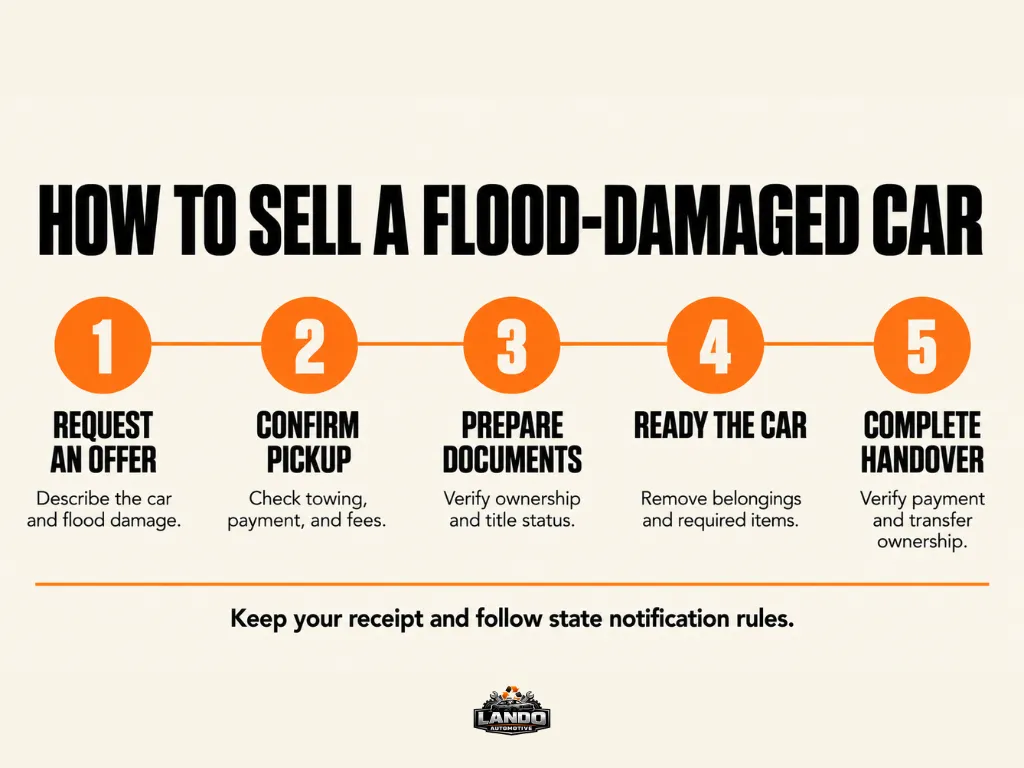
Selling a flood damaged car to a junkyard usually involves a few steps:
- Request an offer – Provide the car’s make, model, year, location, and details about the flood damage.
- Confirm pickup and payment – Ask whether towing is free, when payment will be made, and whether any fees affect the offer.
- Prepare the paperwork – The buyer will need to verify ownership and the vehicle’s title status. If your title is missing, check the requirements for junking a car without a title.
- Get the car ready – Remove personal belongings, license plates, and anything else a car scrapping checklist covers.
- Complete the handover – Verify payment, transfer ownership using the required documents, and keep a receipt. Follow any applicable state notification requirements.
For owners looking to sell a flood damaged car in parts of Indiana and Illinois, Lando Automotive is one option to consider. Regardless of which buyer you choose, understanding how to junk a car can help you prepare the paperwork, arrange pickup, and complete the sale without unnecessary complications.
Frequently Asked Questions
Will FEMA help pay for a flooded car?
Yes, the Federal Emergency Management Agency (FEMA) may help repair or replace a flood-damaged vehicle after a federally declared disaster. Its Transportation Assistance program may cover eligible costs not covered by insurance if the vehicle is unsafe or inoperable. Eligibility depends on ownership, insurance coverage, and transportation needs, with assistance generally limited to one vehicle per household.
Can I sell a flooded electric or hybrid car?
Yes, provided you follow the applicable disclosure and title requirements. However, flood-damaged high-voltage batteries can pose fire and electric shock risks, even after the water recedes. The National Highway Traffic Safety Administration (NHTSA) advises keeping vehicles with potentially damaged lithium-ion batteries at least 50 feet from buildings, other vehicles, and combustible materials.
Avoid charging or starting the vehicle until a qualified professional assesses it, and inform the buyer and towing company about the flood damage.
Can I sell a flood damaged car I still owe money on?
Yes, but the lender holds the title. You’ll need a payoff amount from the lender before you can transfer clean ownership. If insurance pays out, the lender is typically paid first.
Can I donate a flood damaged car to charity?
Yes, some charities accept flood damaged cars, although acceptance depends on the vehicle’s condition. Disclose the damage before donating. Under IRS Publication 4303, tax deductions exceeding $500 are generally limited to the lesser of the car’s fair market value or the charity’s sale proceeds, with exceptions when the charity uses, substantially improves, or transfers the vehicle to someone in need.
Will my insurance rates go up after a flood claim?
It depends on your insurer and state. Flood damage typically falls under comprehensive coverage, which usually affects rates less than an at-fault accident, but ask your provider.
Final Takeaway
The answer to whether is it illegal to sell a flood damaged car depends on the circumstances of the sale. Selling is generally legal, but hiding known damage, making false claims, or failing to meet title requirements can lead to legal consequences.
Before selling, document the vehicle’s condition, disclose known damage, and complete the necessary paperwork. These steps help protect both parties and reduce the risk of disputes after the sale.