An old or damaged motorcycle may reach a point where repairs cost more than the bike is worth. If selling it privately isn’t practical, junking it could be a better option. Still, getting rid of a motorcycle involves more than finding a buyer, especially when ownership documents and transportation need to be arranged.
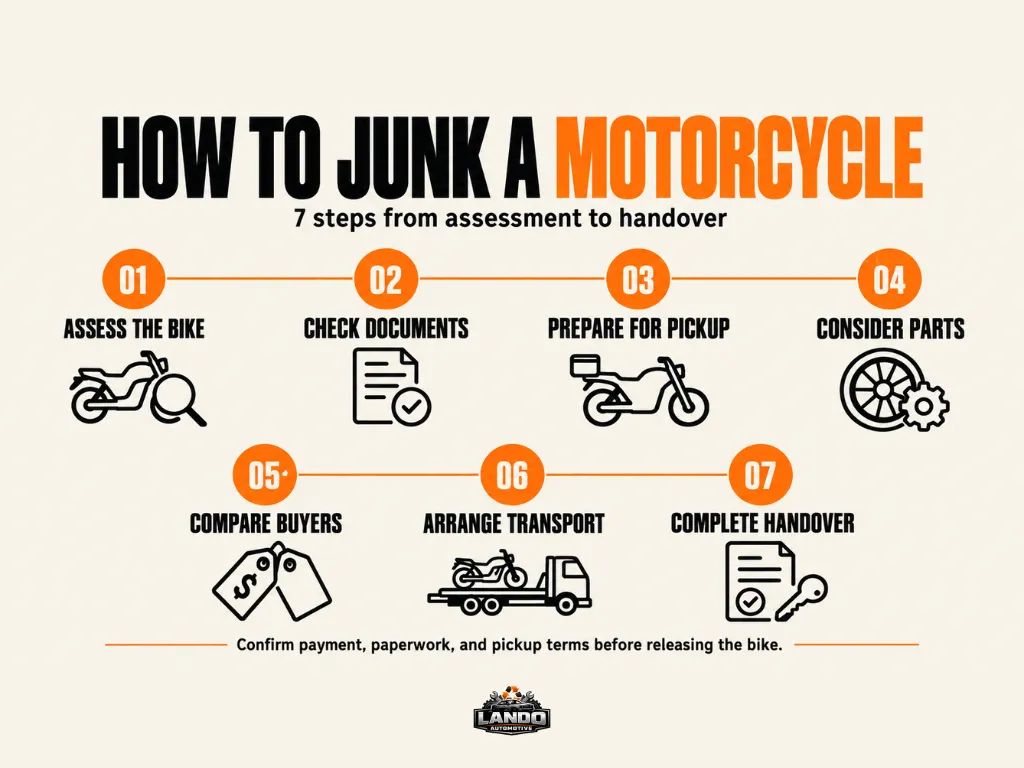
Knowing how to junk a motorcycle can make the process easier and help you avoid unnecessary complications. To help you through each stage, this guide covers seven steps, from checking the paperwork and preparing the bike to comparing buyers, arranging pickup, and completing the sale.
How to Junk a Motorcycle Step by Step
Step 1. Confirm the motorcycle is junk
Before contacting a junk buyer, determine whether scrapping your motorcycle makes more financial sense than repairing or selling it. A motorcycle may be worth junking if repair costs exceed its market value, it has extensive damage, or an insurance company has declared it a total loss.
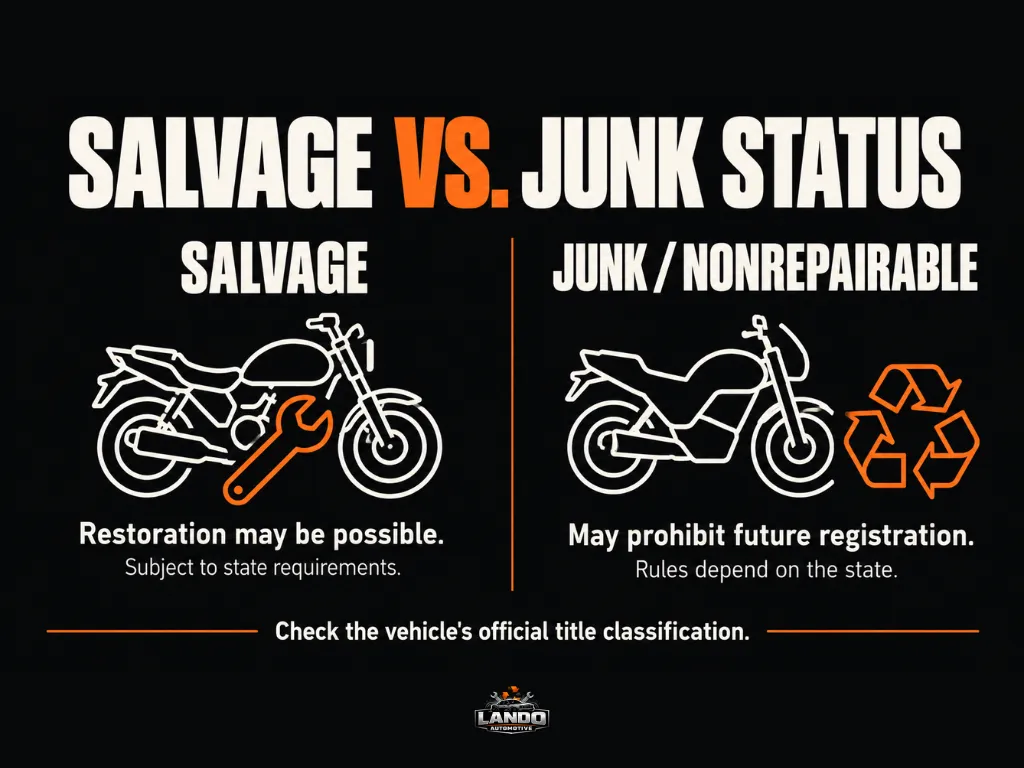
A salvage title generally indicates significant damage, but it doesn’t always mean a motorcycle must be scrapped. Depending on state law, eligible salvage vehicles may be restored and returned to road use, while a junk or nonrepairable designation can prevent future registration.
For example, Indiana has a salvage restoration process, while Illinois distinguishes between salvage certificates and junking certificates. Check your motorcycle’s title status before deciding whether to rebuild, sell, or scrap it.
Step 2. Find the title and proof of ownership
Before selling your motorcycle for scrap, gather the documents needed to establish ownership. Most buyers will ask for the title, along with a photo ID and possibly the current or most recent registration.
If the title is missing, most states offer a replacement process, although some allow alternative documents for scrap disposal. In Indiana, eligible owners can request a duplicate title or apply for a Certificate of Authority when the original is lost, faulty, or destroyed. An approved certificate must be provided to the salvage recycler or other appropriate disposal facility. Illinois also has a duplicate-title process.
A bill of sale alone generally isn’t enough to transfer a titled motorcycle, and similar documentation issues arise when junking a car without a title. Confirm the required paperwork before arranging pickup.
Step 3. Prepare the motorcycle for pickup
Once the paperwork is ready, prepare the motorcycle for collection. Check the saddlebags, storage compartments, and trunk for personal belongings, then remove the license plate according to your state’s requirements. In Indiana and Illinois, sellers should remove their plates before handing over a vehicle.
Next, check with the buyer about fuel and other fluids. Some scrapyards handle fluid removal themselves, so draining anything beforehand may be unnecessary. If fuel removal is required, use appropriate equipment and follow local safety rules. For engine oil, follow the EPA’s guidelines for recycling used oil.
The battery is another item to discuss with the buyer. Ask whether it should stay connected or be removed, and avoid handling it yourself unless you can do so safely.
Before the tow truck arrives, clear enough space for the motorcycle to be rolled or carried out without obstacles. This helps prevent damage and makes pickup easier.
Step 4. Decide whether to pull parts first
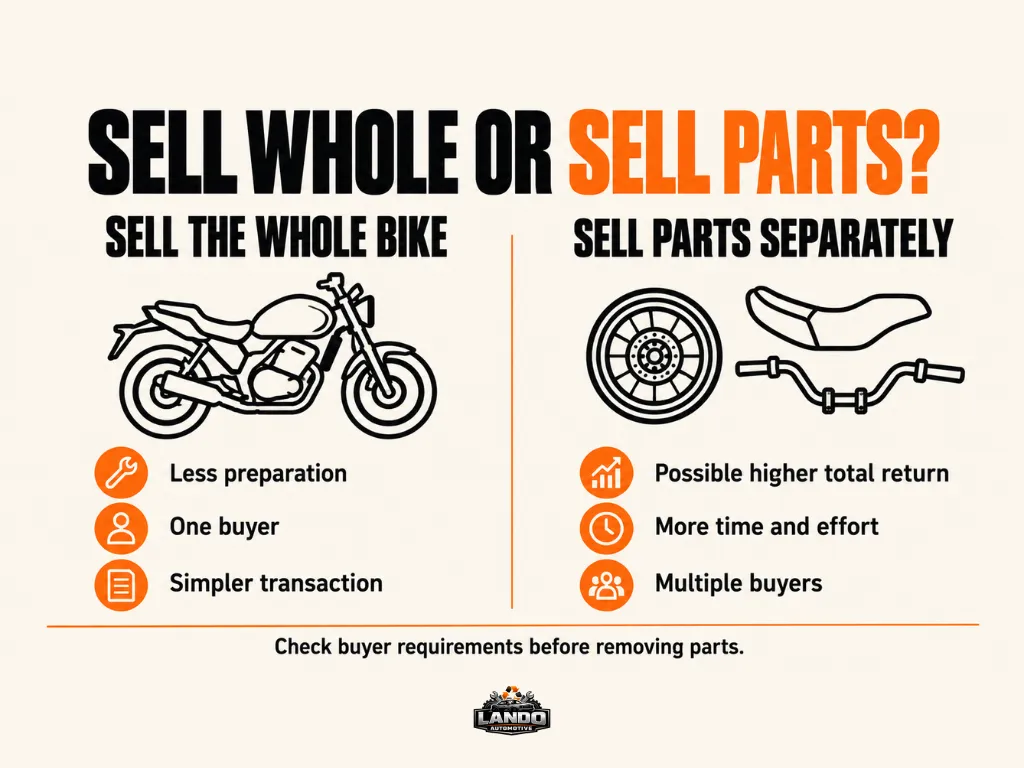
Before selling the motorcycle for scrap, consider whether removing and selling certain parts could earn you more money. Used seats, mirrors, exhaust systems, wheels, windscreens, and handlebars may attract buyers on eBay, Craigslist, or local rider groups.
However, removing parts can reduce the motorcycle’s scrap value or make some buyers unwilling to accept it. Check which components the buyer expects to remain on the bike before taking anything off.
Selling parts separately makes sense if you have the tools, time, and a way to find buyers. Otherwise, selling the motorcycle as-is is usually the simpler option.
Step 5. Choose where to send the motorcycle
Where you sell your motorcycle affects how much money you receive and how much effort it takes. Junkyards and salvage yards may pay for reusable parts, while scrap yards focus on metal value. Understanding the difference between a scrap yard and a junkyard can help you choose. If you’re unsure how to scrap a motorcycle with few usable parts, contact local scrap yards to confirm whether they accept incomplete bikes and how they calculate their offers.
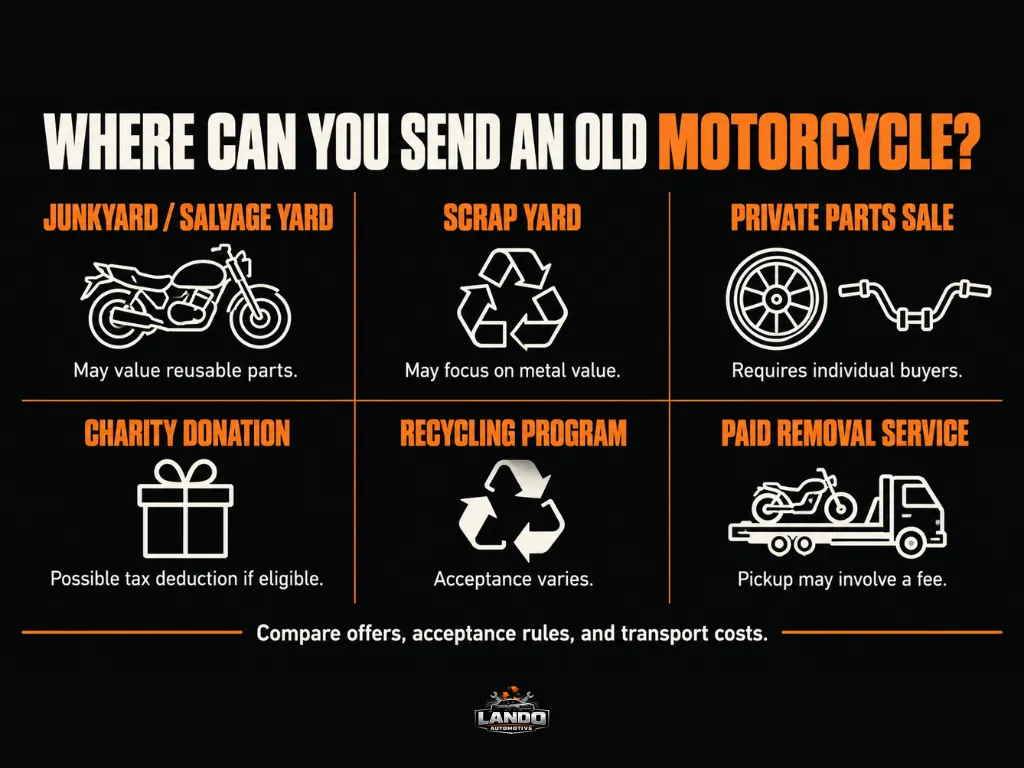
Selling parts privately may bring in more money but takes longer. Donating to an eligible charity may qualify for a deduction under IRS vehicle donation rules. Some recycling programs also accept motorcycles, while paid junk removal services charge for pickup.
Compare at least two offers, check reviews, and confirm whether towing is included.
Quick comparison
| Route | Payment | Your Effort | Speed | Best For |
| Junkyard or Salvage Yard | Cash, often low | Medium | Fast | Whole bikes |
| Scrap Yard | Cash by weight | Medium | Fast | Stripped frames |
| Private Parts Sale | Potentially highest | High | Slow | Popular models |
| Charity Donation | None; possible deduction | Low | Moderate | Charitable giving |
| Local Recycling Program | Varies | Low | Varies | Accepted vehicles |
| Paid Junk Removal Service | You pay | Low | Fast | Quick cleanup |
Step 6. Arrange pickup or towing for a non-running bike
You’ve picked a destination, so next you have to get the bike there. You can drop it off yourself with a trailer or truck, let the buyer pick it up, or hire a tow service.
Who pays depends on the buyer. Some yards pick up for free. Others subtract the towing cost from the offer. Get the pickup cost and the final payout in writing before the truck is booked.
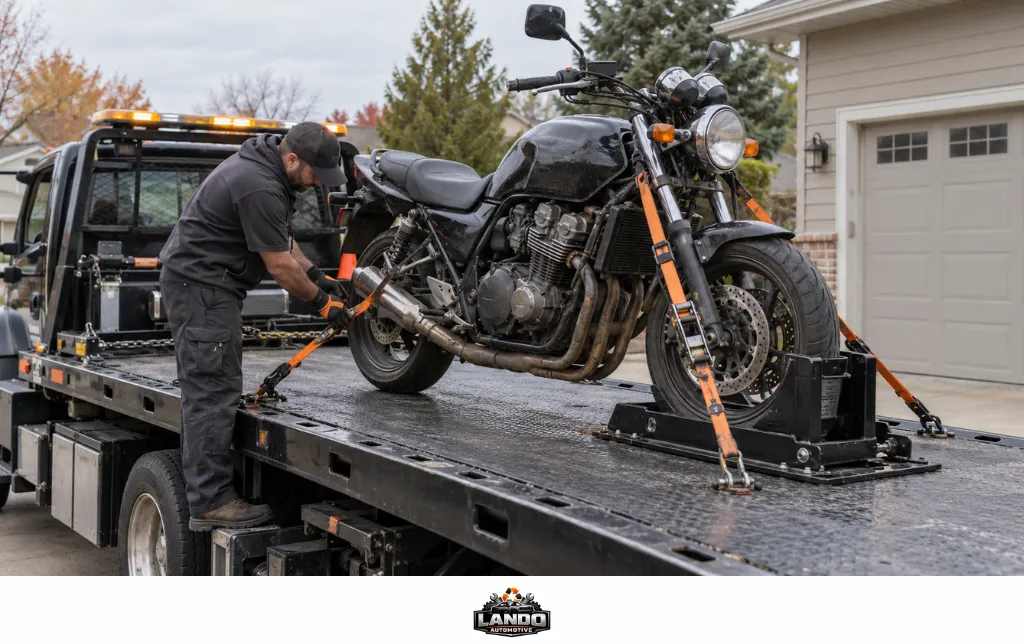
A bike that won’t roll needs extra care. Motorcycles weigh several hundred pounds, so use suitable loading equipment and secure the bike properly. If you can’t load it safely, leave the job to a towing professional.
Step 7. Hand over the motorcycle and keep proof
When the tow truck arrives, complete the paperwork before releasing your motorcycle. Follow these steps to document the transaction and avoid ownership issues later:
- Confirm the agreed payment before releasing the bike.
- Complete the title assignment or other approved ownership-transfer documents. The requirements depend on your state and whether the motorcycle is sold or permanently scrapped.
- Get a bill of sale or transaction receipt and keep a copy.
- Complete any required seller notification. In Illinois, sellers must complete and mail a Seller’s Report of Sale immediately after selling or releasing their interest in a vehicle titled or registered in the state. Indiana generally handles ordinary sales through the completed title assignment.
- Remove the license plate before handing over the motorcycle. Indiana and Illinois generally require sellers to keep their plates rather than leave them on the vehicle.
- Contact your insurer about canceling coverage once the transfer is complete.
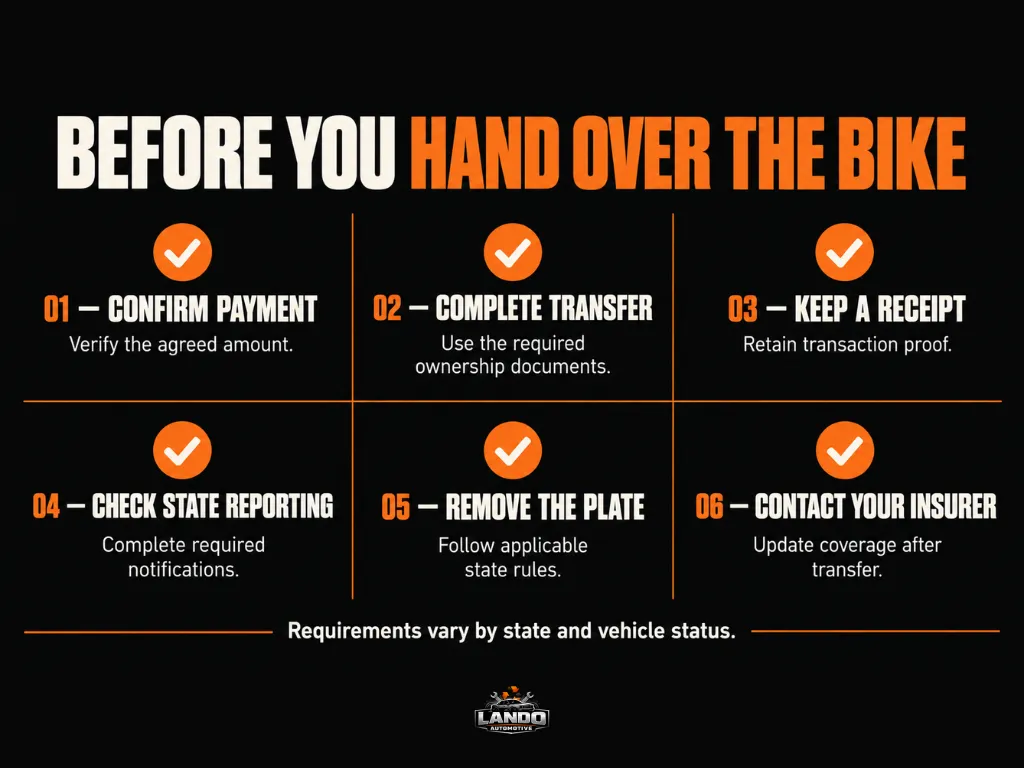
Ownership transfer and reporting requirements vary by state, especially when a vehicle is permanently scrapped rather than sold for continued use. Similar paperwork issues arise when notifying the state after junking a car.
Keep your bill of sale, a copy of the completed title, and any applicable sale notification or junk certificate. Don’t release the motorcycle until the payment and paperwork are settled.
Frequently Asked Questions
Can you junk a motorcycle that still has a loan on it?
Usually, you’ll need to settle the outstanding loan and obtain a lien release before junking your motorcycle. Contact your lender to confirm the payoff amount and whether the balance can be settled as part of the sale. Similar restrictions apply when junking a car with a lien.
How do you junk an electric motorcycle?
The steps are the same as above, but the battery needs special handling. Tell the buyer up front that the bike is electric. Don’t try to remove the high-voltage battery yourself.
Does the same process work for a dirt bike, scooter or moped?
The disposal process is similar, but ownership requirements depend on the vehicle’s classification and state law. For example, Indiana accepts different proof-of-ownership documents for motorcycles and motor-driven cycles, while Illinois has separate rules for certain off-road vehicles. Confirm the required paperwork before arranging disposal.
What should you do with an inherited motorcycle you do not want?
First, establish your legal authority to transfer the motorcycle. Requirements vary by state and depend on how the vehicle was titled and whether the estate requires probate. Indiana and Illinois have procedures for inherited vehicles, including transfers involving beneficiaries, surviving owners, and estates. Once the appropriate ownership documents are in place, the motorcycle can be sold or scrapped.
How long does it take to junk a motorcycle from start to finish?
It depends on your paperwork and the buyer’s schedule. A bike with a clear title and a ready buyer can move quickly. A missing title or a parts-first plan adds time.
Conclusion
Knowing how to junk a motorcycle makes the process easier, especially when you have the paperwork ready. Start by confirming the bike’s condition, gathering ownership documents, and deciding whether selling individual parts is worth the extra effort.
From there, compare buyers, confirm payment and pickup terms, and complete the ownership transfer. Since title and reporting requirements vary by state, make sure the paperwork meets the rules that apply to your motorcycle and how it’s being disposed of.
Once the motorcycle is gone and the paperwork is complete, you can move on without worrying about unresolved ownership issues.